Your Siding Doesn’t Need More Pressure. It Needs Less


Someone on your street rented a pressure washer last weekend. You could hear it from your kitchen. By Sunday afternoon the front of their house looked terrific, and by the following spring there were chalky streaks running down the vinyl beneath every window and a warped section near the hose bib.
That isn't bad luck. That's a machine doing exactly what it was designed to do, aimed at a surface that was never designed to take it. Exterior cleaning has a reputation problem in residential neighbourhoods, and most of it is earned. The equipment rents cheap, the results look instant, and nobody at the counter mentions that pressure is the least important variable in the job.
Two Different Trades With One Name
Pressure washing is mechanical. Fast-moving water strips material off a surface by force. It's the right answer for concrete: a driveway with a decade of tire rubber ground into it, a parkade floor, a patio that has gone green in the shade.
Soft washing is chemical. A cleaning solution goes on at roughly garden-hose pressure, sits long enough to break organic growth down at the root, then gets rinsed away. The solution does the work. The water only carries it.
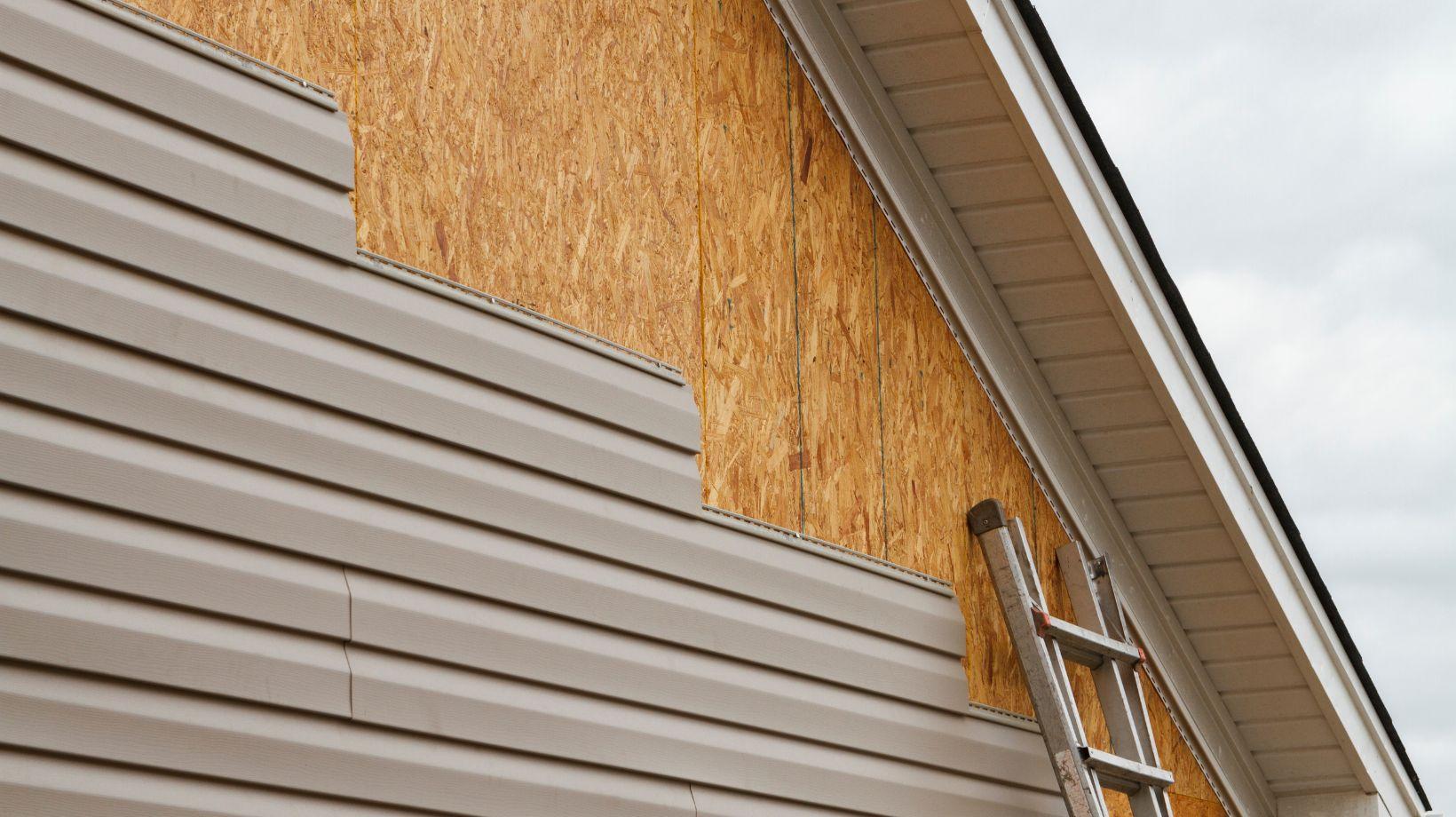
Siding, roofing, painted trim, stucco and aging mortar belong in the second category, and the distinction isn't a marketing flourish. Vinyl siding is a thin skin hung loosely on a wall so it can expand and contract through a wide annual temperature swing. Hit it hard enough and you don't clean it. You drive water up underneath it.
The Damage You Can’t See From the Driveway
This is the part homeowners consistently underestimate. According to BC Housing's cladding maintenance bulletin, inappropriate use of pressure washing can damage components of the wall assembly and introduce water behind the cladding. The same document recommends that cladding generally be cleaned with non-pressurized water.
Water behind cladding doesn't announce itself. It sits in the wall cavity and works slowly on sheathing, fasteners and insulation. You notice it years later as a soft spot, a stain bleeding through drywall, or a repair bill that has nothing obvious to do with the afternoon someone cleaned your siding.
Stripped paint and etched stucco at least have the courtesy to be visible.
Black Streaks on a Roof Are Not Dirt
Those dark vertical runs on north-facing asphalt shingles are a living colony of algae. Moss is the next stage, and moss is the one that costs money. It holds water against the shingle, lifts the edges as it creeps underneath, and keeps the surface damp right through the shoulder seasons when it would otherwise dry out.
The reflex is to blast it off. That reflex takes the protective granules with it, and those granules are the only layer standing between your shingles and constant UV exposure. You end up with a clean roof and a shorter roof.
A properly treated roof is soft washed. The growth dies and weathers off over the following weeks rather than coming away in satisfying sheets on the day. It looks less dramatic. It's also the only approach that doesn't shorten the life of the thing you're trying to protect.
The Okanagan Is Harder on Exteriors Than It Looks
Kelowna's climate does something unusual. It delivers two opposite kinds of stress in the same twelve months.
Summers are hot, dry and dusty, and increasingly they are smoky. The BC Wildfire Service recorded roughly 886,300 hectares burned across the province in 2025, a quieter year than the record 2.84 million hectares of 2023, but still well above the ten-year average. Smoke season leaves a fine particulate film on north- and west-facing walls, on windows, on decks and railings. It bakes on in the sun, and most people stop seeing it because it arrives so gradually.
Then winter brings the opposite problem. Cold, damp, long shadows, snow banked against the bottom courses of siding and sitting in the gutters for weeks. That is the window when organic growth takes hold, on roofs, fences, north walls and any concrete that never sees direct sun.

Deal with the summer film in autumn and you strip out the food source before the wet months begin. That one piece of timing does more for an exterior than any amount of pressure.
Frequency Beats Intensity
The instinct is to leave a house until it looks bad, then attack it. The better pattern is a light touch on a schedule. The same BC Housing guidance suggests cleaning vinyl siding and stucco roughly every two years, wood siding every three, and masonry and fibre cement closer to every five, adjusted for exposure, shade and how close the trees sit.
A property kept on that rhythm never needs an aggressive intervention, because nothing ever gets a foothold in the first place.
Ask Which Tool the Surface Wants
The useful question for a contractor isn't what equipment they own. It's what they would do differently on vinyl versus brick versus a tile roof. A crew that answers that easily is thinking about the building. A crew that reaches for the same wand at the same setting for all three is thinking about the clock.
Established local operators such as Hammerhead Exterior Home Cleaning cover Kelowna, West Kelowna, Lake Country, Peachland and up through Vernon, and the ones worth hiring anywhere will ask about your surfaces before they quote a number.
Clean siding is the visible part of the result. What you are actually buying is a wall that stays dry, a roof that lasts the years its manufacturer promised, and the absence of a repair you would otherwise end up paying for twice.