
Crumbs, Pet Hair, and Unexpected Spills: A Realistic Cleaning Routine for Busy Families



Between school mornings, work deadlines, pets, and dinner, keeping the floors clean can feel like one more job on an already crowded schedule. The good news? A manageable routine doesn’t require a spotless house or an entire weekend devoted to cleaning.
It’s 6:30 on a Tuesday evening. Someone has dropped cereal beneath the kitchen table, the dog has brought mud in from the backyard, and a pile of toys has somehow migrated from the playroom into the hallway.
The dishwasher still needs loading. There’s homework to supervise. And nobody is particularly enthusiastic about getting the vacuum cleaner out.
Sound familiar?
In a busy family home, the challenge isn’t necessarily knowing how to clean. It’s finding a way to do it without sacrificing the little time everyone has together.
The answer usually isn’t a more demanding cleaning schedule. It’s working out which jobs make a difference today, which ones can wait, and how everyone in the household can help.
Start with the rooms where family life actually happens
Walk through the house at the end of an ordinary weekday and you’ll probably notice a pattern.
The kitchen floor has collected crumbs from breakfast and dinner. The entryway has picked up dirt from shoes and backpacks. And the living room, where children play and pets settle down, has gathered a little of everything.
Meanwhile, the guest bedroom may be perfectly fine.
There’s no reason to give both spaces the same amount of attention.
Concentrating on the rooms that get the most use makes cleaning more manageable, particularly when time is limited.
In the kitchen, a quick sweep or vacuum after meals can keep food debris from being tracked into other rooms.
Near the front door, a washable mat and a designated place for shoes can help prevent outdoor dirt from traveling across the house.
And in the living room, returning toys and other belongings to their usual spots makes the floor easier to clean without constantly stopping to move things.
None of these habits is especially complicated. That’s precisely why they’re easier to maintain.
Not every mess needs the same cleaning method
One of the most frustrating things about family cleaning is that the mess never seems to arrive in one convenient form.
There are dry crumbs beneath the table, a sticky patch near the refrigerator, pet hair along the baseboards, and sometimes a muddy footprint right in the middle of the hallway.
Trying to tackle everything with the same tool can make the job harder.
Dry debris is generally easiest to collect before adding moisture. Sand, small stones, and other gritty particles deserve particular attention because they can scratch delicate surfaces when dragged across the floor.
For carpets, rugs, and upholstered furniture, a conventional vacuum cleaner with appropriate attachments remains useful.
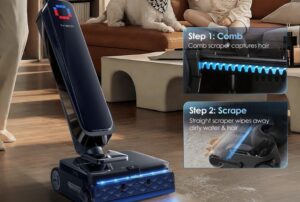
On compatible hard floors, a wet dry vacuum can offer another approach.
Depending on the model, these appliances collect certain everyday debris while washing the floor, reducing the need to switch between separate tools.
That can be particularly convenient in kitchens and busy entryways, where crumbs and damp marks often appear together.
But it doesn’t mean every floor washer can clean carpets, pick up large debris, or handle every type of spill.
Always check what the appliance is designed to collect and whether the flooring manufacturer allows the cleaning method.
A little care at this stage can prevent a small mess from becoming a damaged floor.
Pet hair and muddy paws: keeping up without cleaning constantly
Anyone who lives with a dog or cat knows how quickly pet hair can reappear.
You vacuum the living room, turn around, and discover another little collection of hair near the couch.
Some of it gathers around pet beds and favorite sleeping spots. The rest settles beneath furniture, along baseboards, or between the fibers of rugs.
Instead of vacuuming the entire house repeatedly, focus on the areas where your pets spend the most time.
For carpets and upholstery, use attachments appropriate for the material. A brush designed to help reduce hair tangling may also make maintenance easier, although it won’t eliminate the need to check the brush roll.
For families comparing dry vacuum cleaners, the Tineco PURE ONE A90S is one example of a cordless model intended for collecting dust, debris, and pet hair on suitable surfaces.
It’s worth considering the weight, attachments, battery runtime, and cleaning requirements rather than judging an appliance solely by its advertised suction power.
Muddy paws present a different problem.
An old towel kept near the door can make a surprising difference after a rainy walk.
Gently wiping your dog’s paws before they reach the living room helps stop mud from spreading. If dirt is trapped between the paw pads, a careful rinse with lukewarm water may be appropriate, followed by thorough drying.
Avoid using household cleaning products directly on an animal’s paws.
Once the larger pieces of dirt are removed, any remaining floor marks can be treated using a method suitable for the surface.
It’s much easier than following a trail of footprints through three rooms.
The ten-minute evening reset
Ten minutes won’t deep-clean an entire house.
But that’s not the point.
A short reset can deal with the mess that’s most likely to become tomorrow’s problem.
Imagine the family has finished dinner. Before everyone settles down for the evening, take a few minutes to put the main living areas back in order.
Here’s one way to divide the time.
Minutes 1–3: Clear the floor.
Return toys, shoes, backpacks, and other belongings to their usual places.
Children can help with age-appropriate tasks, such as putting blocks into a basket or carrying their shoes to the rack.
Minutes 4–6: Check the kitchen.
Collect crumbs, wipe up small spills, and deal with any food that has fallen near the dining table.
Use a cleaning method appropriate for the floor rather than automatically reaching for a wet mop.
Minutes 7–8: Look at the entryway.
Check for muddy marks, loose dirt, and wet shoes.
If the entrance mat is dirty or damp, address it before the mess spreads.
Minutes 9–10: Take care of one trouble spot.
Maybe there’s pet hair near the couch. Perhaps the area around the dog’s water bowl needs attention.
Choose one small job that will make the next morning easier.
And if the kitchen is already clean, there’s no need to spend three minutes pretending it isn’t.
A routine should be flexible enough to accommodate real family life.
Some evenings will be busier than others. That’s fine.
Getting children involved without turning cleaning into an argument
It can be tempting to finish every job yourself because explaining it to someone else seems to take longer.
In the short term, it probably does.
But children who learn simple household habits can gradually take responsibility for some of the mess they create.
The key is to choose tasks that suit their age and ability.
Younger children can return toys to baskets or help put away clean, lightweight items.
Older children may be able to sweep a suitable area or tidy up after a snack with appropriate supervision.
Adults should remain responsible for handling hazardous cleaning products and equipment that children aren’t ready to use safely.
It also helps to be specific.
“Clean up this room” can sound overwhelming.
“Please put the books back on the shelf while I clear the table” is much easier to understand.
Try not to make the evening reset feel like punishment for having enjoyed the house.
The goal is to teach shared responsibility, not to make everyone nervous about dropping a crumb.
When spills happen, speed matters more than scrubbing
Some household accidents are unavoidable.
A cup tips over. Sauce lands beside the stove. Someone spills juice while reaching for a snack.
The first step is usually to contain the spill before it spreads.
Blot or absorb the excess liquid with a suitable cloth, taking care not to push it into flooring joints or beneath cabinets.
Then check what the floor can safely tolerate.
Many tile surfaces allow appropriate damp cleaning, while hardwood and some laminate floors require greater caution around moisture.
An aggressive cleaning product isn’t necessarily the answer to a stubborn mark.
In fact, excessive water, abrasive pads, or incompatible chemicals can damage certain finishes.
If a stain has dried, it may need a little more time and a method specifically approved for the surface.
The best cleaning routine protects the floor as well as removing the mess.
Make weekends about the jobs you couldn’t reach during the week
The daily reset is designed to keep small problems under control.
Weekend cleaning can then focus on the areas that don’t need attention every evening.
That might include vacuuming beneath accessible furniture, washing entrance mats, cleaning around baseboards, or giving carpets and upholstery a more thorough vacuum.
For suitable hard floors, a wet-dry appliance may help with routine washing.
The Tineco FLOOR ONE S7 Stretch Ultra, for example, combines certain debris-collection and washing functions with a design that reclines to 180 degrees.
That configuration may make it easier to reach beneath some sofas and beds, provided there is enough clearance for the cleaning head.
The machine also includes a system intended to help clean and dry its brush roller after use.
However, the S7 Stretch Ultra is not a steam cleaner, and its suitability still depends on the flooring.
Families dealing with more persistent marks on steam-compatible hard surfaces may wish to compare a different approach.
The Tineco S9 Artist Steam Wet Dry Vacuum combines wet-dry floor cleaning with the manufacturer’s HyperSteam technology.
Steam-assisted cleaning may be useful for certain stubborn messes, but it isn’t suitable for every type of flooring.
Some hardwood, laminate, and other heat- or moisture-sensitive surfaces can be damaged by steam.
Before using such an appliance, check both the cleaner’s instructions and the flooring manufacturer’s care guidance.
A more sophisticated machine won’t necessarily be a better choice if most of the home is carpeted or the flooring isn’t compatible.
Don’t forget to clean the cleaning equipment
There’s one household chore that’s surprisingly easy to overlook: looking after the tools used for cleaning.
A vacuum cleaner with a full dust container or clogged filter may not perform as intended.
Hair wrapped around a brush roll can make maintenance more difficult.
And a wet-dry appliance that has been left with dirty water in its tank can develop unpleasant odors.
After cleaning, empty collection containers and follow the manufacturer’s instructions for washing or replacing filters.
For wet floor cleaners, empty the dirty-water tank promptly and maintain the rollers and other washable components as directed.
Some machines offer self-cleaning programs, but that doesn’t mean they require no attention.
It’s also worth keeping cleaning equipment in a convenient place.
If the vacuum is buried behind several boxes in a crowded closet, nobody is particularly likely to retrieve it for a two-minute job.
Easy access can be just as important as the appliance itself. A lightweight vacuum kept somewhere convenient is more likely to be used for a quick clean than a bulky machine that takes several minutes to retrieve.
It doesn’t need to be on display. A well-organized closet, utility room, or storage space near the busiest part of the house can make everyday cleaning much easier.
A family routine should have room for real life
Some weeks run smoothly. Other weeks involve school activities, late meetings, appointments, and the kind of unexpected interruptions that make a carefully planned schedule almost impossible to follow.
That’s why a cleaning routine needs flexibility.
If everyone gets home late on Wednesday, perhaps the evening reset means nothing more than clearing the kitchen floor and wiping up a spill.
If Saturday is busy with sports or family plans, the more thorough vacuuming can happen on Sunday.
There’s no benefit in treating a missed cleaning task as a household emergency.
It can help to identify a few priorities that genuinely matter: keeping food spills from sitting on the floor, preventing muddy shoes from spreading dirt through the house, and making sure frequently used areas remain comfortable.
Other jobs can wait until there’s time.
In homes with young children, keeping floors clear of small toys and objects can also make shared spaces easier to move through. This is especially useful when people are carrying laundry, groceries, or younger children from one room to another.
A manageable home isn’t necessarily one where everything is perfectly arranged. It’s one where everyday activities can continue without clutter and cleaning becoming constant sources of frustration.
Small changes that save time throughout the week
Sometimes the most useful cleaning improvements have nothing to do with buying another appliance.
A washable mat beneath a pet’s water bowl can catch small splashes before they reach the floor.
Keeping a hand towel near the back door makes it easier to deal with muddy paws.
A basket for toys gives children an obvious place to put their belongings when playtime is over.
And storing a suitable cloth close to the kitchen means small spills can be cleaned up without searching through several cupboards.
These changes work because they make the right action convenient.
They also reduce the need to clean the same mess repeatedly.
For families thinking about buying new equipment, it’s worth trying a few of these adjustments first. The results may reveal which tasks remain genuinely inconvenient and whether a different appliance would help.
Frequently Asked Questions About Cleaning a Busy Family Home
How do you keep a house clean when you have children and pets?
Focus on the busiest areas rather than trying to clean every room daily. Keep shoes and muddy paws near the entrance, deal with spills promptly, and give children simple, age-appropriate responsibilities.
Is ten minutes a day enough to keep a family home clean?
Ten minutes won’t replace deeper cleaning, but it can help control everyday mess. Clearing floors, collecting crumbs, and dealing with visible spills may prevent small jobs from building up.
What’s the easiest way to remove pet hair from furniture?
Use a vacuum cleaner with an attachment suitable for the upholstery. Check the fabric’s care instructions, and pay particular attention to the places where pets regularly rest.
Should you vacuum before mopping?
For separate vacuuming and mopping, removing dry dirt first is generally sensible, especially when sand or grit could scratch the floor. Some wet-dry appliances are designed to collect certain debris while washing, but their operating limits still apply.
Can a wet dry vacuum replace a regular vacuum cleaner?
Not necessarily. Many wet-dry floor cleaners are primarily designed for hard flooring and cannot replace a dry vacuum used for carpets, rugs, and upholstered furniture.
Can you use an aspirator mop on hardwood floors?
Only if the flooring manufacturer and appliance manufacturer permit the cleaning method. Some wood finishes are sensitive to excess moisture, even when the surface appears sealed.
How can I stop muddy paw prints from spreading through the house?
Keep a towel near the entrance and gently wipe your dog’s paws after walks. Remove loose dirt before cleaning remaining floor marks with a suitable method.
What is the difference between the Tineco S7 Stretch Ultra and S9 Artist Steam?
The S7 Stretch Ultra combines wet-dry cleaning for compatible hard floors with a lay-flat design and brush self-cleaning features. The S9 Artist Steam adds steam-based cleaning technology intended for certain stubborn marks on suitable surfaces. Steam compatibility must always be checked before use.
How often should you clean a vacuum’s filters and brushes?
Follow the schedule and instructions for the specific model. Homes with pets or substantial amounts of dust may require more frequent inspections and maintenance.
How do you prevent a wet-dry vacuum from smelling?
Empty the dirty-water tank promptly after use, remove collected debris, and clean and dry components according to the manufacturer’s instructions. Automatic self-cleaning does not eliminate every maintenance task.
Should children help with housework?
Children can take part in simple tasks that are appropriate for their age and abilities. Putting toys away, organizing shoes, and clearing lightweight belongings are useful starting points. Adults should supervise and handle hazardous cleaning products and unsuitable appliances.
What’s the best cleaning schedule for a busy family?
One that can be adjusted when life gets hectic. Prioritize frequently used rooms, handle spills when they happen, and spread occasional deeper-cleaning tasks across the week rather than saving everything for one exhausting day.
A Home That’s Lived In Doesn’t Have to Be Perfect
There will always be another crumb beneath the kitchen table.
The dog will probably bring mud inside again. Someone will spill a drink just after the floor has been cleaned, and a forgotten toy will turn up beneath the couch.
That’s what happens when people actually live in a home.
The goal isn’t to eliminate every sign of family life. It’s to keep everyday mess from becoming overwhelming.
A few minutes in the busiest rooms, some shared responsibility, and cleaning equipment that genuinely suits the household can make that possible.
And if the living room looks a little untidy on a particularly busy Wednesday evening?
There’s always tomorrow. Family time doesn’t need to wait for perfectly clean floors.