
Why the Crypto Crash Is Changing the Strategies of Investors in Cryptocurrency and Gaming Companies


The crypto crash shouldn’t be a surprise, given the market’s extreme volatility. However, the recent 2025–2026 crash was difficult to swallow, especially for large investors, as it did not follow a typical free-fall pattern.
“The global dip off the back of renewed tariff threats is what has driven the sell off in the majors, including Bitcoin,” explains Paul Howard, a senior director at Wincent.
Threats of a 100% tariff on imports from China and the 10% import tariff on goods from European countries shook the stock market, triggering broader market anxiety.
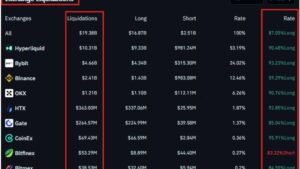
As one would expect, the cryptocurrency stocks took the first hit due to their high liquidity, volatility, and leveraged positions. In fact, overleveraged futures traders went into panic mode and liquidated positions worth over $19bn in 24 hours, the largest sell-off so far.
Bitcoin, widely regarded as the flagship cryptocurrency, has witnessed a dive since the start of the crypto crash. The price plummeted from the all-time high a few days after Trump’s 100% China import tariff shocker. Bitcoin declined from over $121,000 to $106,000 in a few hours, while Ethereum, the backbone of DeFi, went from $4,300 to $3,600.
In the wake of the crash, investors began reassessing their investment strategies. Interest has shifted from Bitcoin stocks to more stable equities. Hard questions about fundamentals, cash flow, and resilience are now replacing speculative tendencies that once held sway. Gaming stocks, especially those associated with the blockchain, are now noticeable.
“Why is crypto down?” is no longer the concern for investors seeking a way out. The discussion now revolves around the types of stocks to invest in after the crash. This article will examine how investors can recover from crypto volatility.
Anatomy of the Crypto Crash
The 2025–2026 crypto crash followed a familiar pattern seen in previous market downturns. It was caused by political unrest and speculation, causing a chain reaction of panic selling. But once all the factors started coming together, we watched a historic capitulation play out before our very eyes. The key stages in the timeline are:
- Early 2025: Bitcoin and the crypto industry enjoyed steady growth. One would expect that the January 21 announcement of a $1.1bn BTC purchase by MicroStrategy would positively impact the price. Instead, it maintained a consistent value, closing at $106,136 that same day.
- Mid–2025: This period saw two all-time highs of $111,679 and $123,339 in May and August, respectively. This August record did not hold for long, as the price hit $118,000 two days later. This is following the Producer Price Index report that indicated year-on-year rising inflation rates beyond the projected results. This poor outlook triggered fears of hiked interest rates, a speculation that affects the risk stocks – crypto, a typical example.
- Q4 2025: On 6 Oct., Bitcoin hit an all-time high of $126,198.07. A feat that was later shattered in the following days by utterances that created fear. President Trump’s announcement of a 100% tariff against China sent a shockwave to the traders, resulting in the largest recorded panic dump. This caused a massive fall in Bitcoin value, touching a low of $84,648 on Nov. 22. It, however, pulled up to $92,119 by Dec. 1.
- 2026 so far: The pullback has not been significant as the price still shuttles between $80,000 and $90,000, starting the year on a concerning note. With the market direction unclear, speculation has increased again, as Bitcoin long-term holders are dumping massively. In fact, they have sold about 143,000 BTC worth around $9.5 billion. This leaves little to hope for, as this creates fear that a larger bearish run is lurking. Crypto Exchange Liquidation Data
The triggers were clear:
- Tariff Threats: Trump’s tariff macro-led threat on imports from China is a major triggering factor for the meltdown. It threw investors into panic mode, resulting in a large-scale liquidation. His 2026 10% import tariff from European countries and renewed threat on Chinese imports triggered the new year’s fall.
- Exchange Collapses: At some point, some mid‑tier exchanges froze withdrawals. As is typical of the market, investor confidence evaporated. Those who had parked assets on these platforms rushed to liquidate. This accelerated the downturn by quite a bit.
- Rising Interest Rates: Market volatility made speculative assets like crypto lose their shine. The opportunity cost of holding a fluctuating BTC became too high. And since government bonds offer safer yields, they became the go-to option.
- Panic Selling: Retail investors have already been scarred by previous bearish trends. The most recent one caused them to dump holdings en masse. This created much FUD, and of course, FOMO.
Although BTC’s August 2025 40% volatility has corrected to 29% (VanEck, 2026), it remains elevated. It was not just about falling prices, but about the erosion of confidence in crypto as a stable asset class.
Company Sample Selection
To assess the fallout, we focus on a mix of cryptocurrency stocks and gaming companies exposed to blockchain or NFTs. For those interested in the technological side of the share market, innovation source provides up-to-date insights into blockchain and crypto innovations. Our evaluation criteria included:
- Direct exposure to crypto markets;
- Integration of blockchain or NFTs;
- Listing on major exchanges;
- Relevance to investor sentiment.
Sample Companies/Tickers:
- Coinbase (COIN, NASDAQ) – Cryptocurrency exchange;
- Riot Platforms (RIOT, NASDAQ) – Bitcoin mining;
- Marathon Digital (MARA, NASDAQ) – Bitcoin mining;
- Galaxy Digital (GLXY, TSX) – Crypto investment company;
- Animoca Brands (private, Hong Kong) – Blockchain gaming & NFTs;
- Entain Plc (ENT, LSE) – Major gambling stock;
- Aristocrat Leisure (ALL, ASX) – Gaming giant;
- DraftKings (DKNG, NASDAQ) – Sports betting with crypto tie‑ins;
- Block Inc. (SQ, NYSE) – Payments firm with BTC exposure;
- Ubisoft (UBI, Euronext) – Gaming publisher with NFT initiatives.
Correlation Analysis: Crypto vs Gaming Stocks
We have seen a correlation between crypto and gaming equities tighten since 2021. However, the crypto crash revealed some pretty important divergences.
- Crypto Stocks: Coinbase and Riot Platforms fell in near lockstep with BTC. Their revenues collapsed as prices fell. This is unsurprising, considering that their values are tied to trading volumes and mining profitability.
- Gaming Stocks: Companies with diversified revenue streams seemed to weather the storm better. Some glowing examples are Entain and Aristocrat Leisure.
- Gaming Outperformance: Gaming revenues are less tied to speculative cycles. In fact, there is a trend in a rise in gaming demand during crypto downturns. The global gaming market is projected to grow to $386.04 billion in 2026, up from about $343 billion in 2025.
- Gaming Underperformance: Another of our findings is that companies heavily invested in NFTs (e.g., Ubisoft) saw backlash from players and investors.
This analysis shows how labile cryptocurrency stocks are to BTC’s fall; gambling stocks prove more stability.
Fundamentals After the Crash
The crash forced investors to scrutinise fundamentals. ASX stocks like Aristocrat Leisure became attractive because of their strong balance sheets compared to fragile crypto miners.
- Revenue and EBITDA: Coinbase’s revenue fell short of expectations. It only grew 3% year‑on‑year as trading volumes dried up. However, Q1 2026 has so far seen a rise of 46.24% in Coinbase’s revenue. Riot Platforms reported negative EBITDA for two consecutive quarters, but with long-term positives. Entain conversely posted a 6% revenue rise in Q3 2025. Aristocrat Leisure was able to maintain EBITDA margins above 15%. This is in spite of NFT write‑downs, which is quite impressive.
- Debt Ratios: Crypto miners like Marathon Digital carry high leverage. This made them especially vulnerable to price swings. Gaming companies were generally able to sustain dividends, as they had better debt‑to‑equity ratios.
| Company | Revenue Growth (YoY) | EBITDA Margin | Notes |
| Coinbase (COIN) | 3% | 24.55% | Revenue tied to trading volumes |
| Riot Platforms | 118.50% | 34.88% | Mining costs exceeded revenues |
| Entain (ENT) | +6% | 21.38% | Strong gaming demand |
| Aristocrat (ALL) | +8.70% | 18.91% | Stable ASX stock |
| Ubisoft (UBI) | -16.20% | 3.81% | NFT backlash |
The contrast in performance is clear across revenue growth, margins, and balance-sheet strength. Companies with diversified income streams and manageable leverage have shown greater resilience through the downturn.
Stock Market Today: Price Reactions
As you’d expect, price reactions have varied over the past 6 to 24 months. Crypto stocks have remained prone to the hostile, volatile market, especially with the recent crypto crash. Gambling stocks, on the other hand, show steadier recovery.
| Sector/Company | 6-Month Trend | 12-Month Trend | 24-Month Trend |
| Bitcoin (BTC) | -29.54% | -19.61% | +92.82% |
| Coinbase (COIN) | -40.57% | -13.62% | -20.84% |
| Riot (RIOT) | +41.30% | +56.69% | N/A |
| Entain (ENT) | -38.32% | -11.32% | -36.88% |
The stock market today reflects a pretty interesting situation. Crypto‑linked equities remain under pressure, while gaming names are slowly regaining ground. Riot Platforms defied expectations with a remarkable 41.30% gain over six months, capitalizing on Bitcoin’s recovery phases. However, Coinbase’s persistent underperformance shows the risk associated with crypto-dependence.
Changing Investment Strategies
The crash has shifted investor behaviour. People are now tending toward actual value over speculation. You can’t fault them, really. As they say, once bitten, twice shy. And too many investors have been bitten in the recent crash. We’re now witnessing a shift towards new strategies:
From Speculation to Fundamentals
Hype or token launches no longer do it for investors. They’re now digging into quarterly reports and stuff. Some are even checking EBITDA margins and comparing debt ratios. This is the stage where companies must prove they can generate sustainable cash flow.
Gaming Stocks as a Hedge
“The gaming industry is demonstrating resilience, and investors are biting.”
– Victor Oladapo, Slotozilla

Players seeking additional value in the online gambling space can benefit from offers on Slotozilla, which provide a head start on digital gaming platforms. With the stock market crash and uncertainty, many investors are now turning to online gambling stocks as a relatively safer, less volatile option. The sector’s growth remains strong, with global gaming revenue projected to reach $386.04 billion in 2026, which helps explain why these stocks are increasingly preferred over crypto stocks.
Diversification Across Asset Classes
Portfolios are being rebalanced. Instead of going all‑in on cryptocurrency stocks, investors are spreading risk across ASX stocks, dividend‑paying blue chips, and selective exposure to crypto ETFs. This diversification reduces the chance of catastrophic losses.
Focus on Dividends and Buybacks
With speculative growth harder to find, dividend‑paying companies are back in fashion. Aristocrat Leisure and Entain, for example, are attractive not just for their growth but for their ability to return capital to shareholders.
The new playbook is about resilience. Investors who once piled into Bitcoin stocks on hype are now asking which stocks to buy that can withstand shocks.
Risks for 2026
Things should be looking up from where we stand. However, there are some significant risks anyone involved with the market should note:
- Regulatory Crackdowns: Governments in Europe and Asia are tightening rules on exchanges and crypto‑linked gambling. This could limit growth for both crypto stocks and gambling stocks. For instance, stricter KYC requirements may reduce trading volumes.
- Recession Fears: We believe discretionary spending on gaming could dip. Gambling often proves counter‑cyclical. Game companies may take a hit on premium title sales.
- Extended Crypto Winter: Prolonged low prices would hurt miners and exchanges. This would keep cryptocurrency stocks under pressure. From a keen perspective, you’d notice the vulnerability of mining firms with high debt loads.
- Market Contagion: Another stock market crash could spell trouble – even for ordinarily strong companies. Global equities tumbling could see investors selling gaming stocks with crypto to raise cash.
ASX 200 Benchmark
The ASX 200 has become a useful benchmark for comparing crypto‑exposed equities with traditional gaming names. While BTC witnessed a 19.61% loss and ETH about 40% in 2025–2026, the ASX 200 enjoyed a 5.39% increase over the same period.
ASX stocks like Aristocrat Leisure outperformed crypto miners by a wide margin. This relative strength has encouraged Australian investors to rotate into domestic equities rather than chase volatile crypto stocks abroad. The ASX 200’s stability has also reminded investors that broad‑based indices can act as anchors in turbulent times.
Best Stocks to Buy Post‑Crash
We’ve put our best into analysing the best stocks to buy to restart with. Our experts’ picks have been made based on fundamentals and recovery potential. The assets that made the cut are:
- Aristocrat Leisure (ALL, ASX)
- Entain Plc (ENT, LSE)
- DraftKings (DKNG, NASDAQ)
- Block Inc. (SQ, NYSE)
- Galaxy Digital (GLXY, TSX)
We’d have you know that this is not financial advice or endorsement. What we have here is an assistive opinion on stocks to buy. Investing in cryptocurrency stocks, gambling stocks, or any equities carries risk. Do your own research before making investment decisions.
Conclusion
The 2025-2026 crypto crash has changed the way people invest. With crypto, it was almost always about speculation, fear of missing out, and trend. No fundamentals, strategic planning, or analysis. Now, investors are more conscious of these basics. Dividends and diversification, once relegated, today are the deciding factors. For this, gaming companies have become favorites over crypto stocks, due to a relatively low risk.
For every smart investor, a safe strategy is portfolio diversification. This means selective crypto, resilient gambling stocks, and stable equities in the ASX 200. The old saying is still relevant – Don’t put all your eggs in one basket. It’s time to grow up.