
A Library of You: Crafting Premium Custom Photo Books That Feel Like Limited Editions


Think of your life as a library — each chapter worthy of its own carefully bound volume. A photograph captures a moment, but a thoughtfully assembled photo book transforms scattered memories into a cohesive, lasting narrative. The real appeal is in the elevation: taking everyday images and turning them into artisan-quality keepsakes that carry the heft and prestige of limited-edition art books. This guide covers the entire process — from image curation and design principles to production techniques and finishing touches — with a single goal in mind: creating something tangible, heirloom-worthy, and genuinely worth passing down.
Introduction
Why Photo Books Feel Like Limited Editions
Physical books carry an emotional and archival weight that digital storage simply cannot replicate. There is something irreplaceable about the tactile experience — the texture of a matte page, the resistance of a sewn spine, even the faint scent of fresh ink. Unlike mass-produced volumes, custom books offer limited-edition qualities: unique image sequencing, hand-selected paper stocks, and binding choices that make every copy singular. The result is less a product and more a personal monograph — a collector-worthy artifact assembled from lived experience.
High-end photobook creators often build “dummy” prototypes before final production, reviewing blank page mock-ups purely to assess tactile flow. It is a small step that reveals an enormous amount about pacing and proportion.
Curating Your Personal Archive: Image Selection and Sequencing
Strong photo books prioritize storytelling over quantity. Tools like Adobe Bridge help organize large digital collections by rating, tagging, and filtering images before you commit to a layout. Once a shortlist exists, sequencing becomes the real craft — building narrative arcs with emotional peaks, quieter reflective moments, and smooth visual transitions between them.
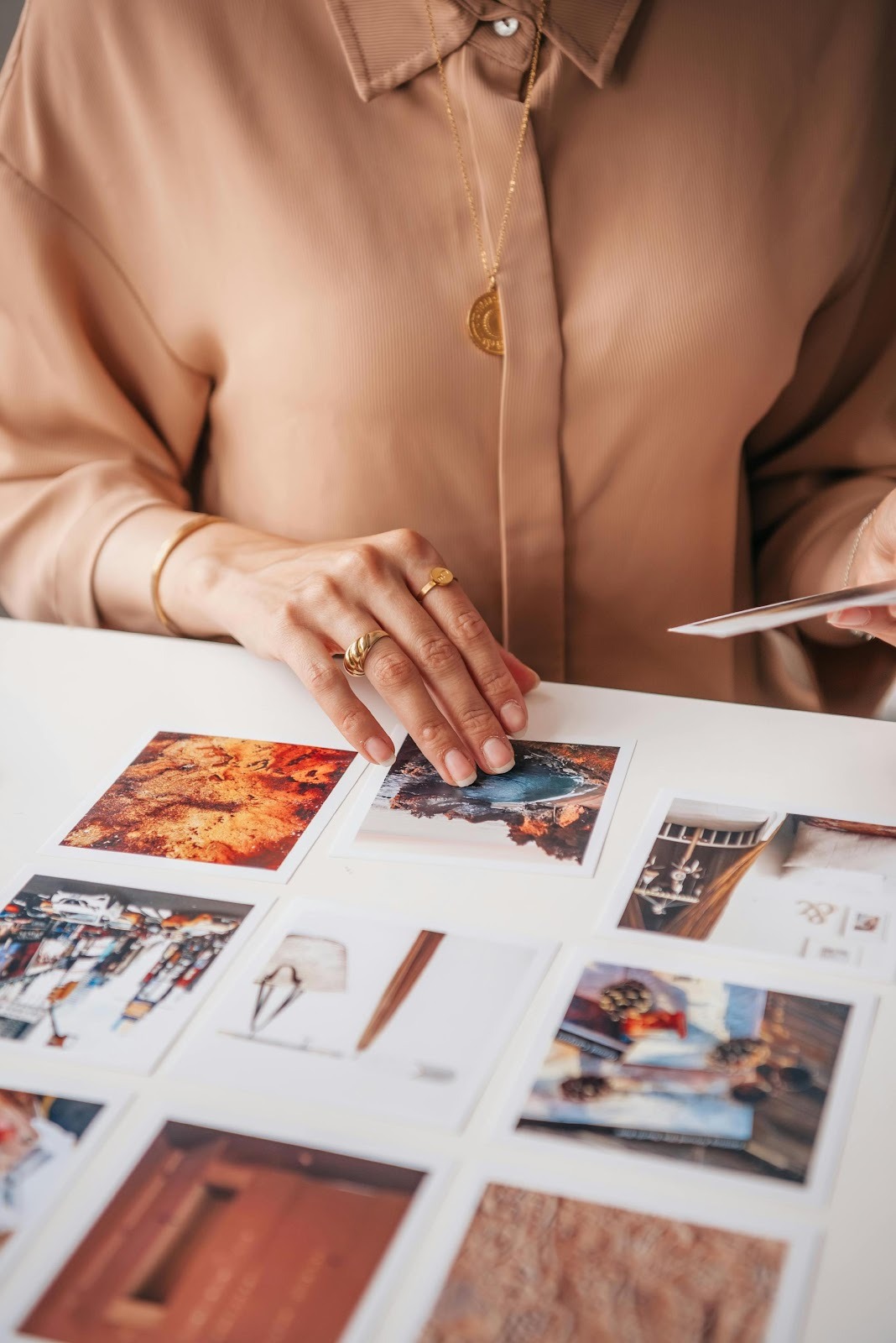
Printing physical proofs during this phase is remarkably useful. Spreading prints across a table reveals instinctive connections between images that a screen often obscures. For a family vacation album, for example, thematic spreads such as “arrival,” “adventures,” and “reflections” create natural chapters within a chronological flow.
Expert tip: Aim for 40–80 images per book. Fewer images per spread creates a gallery-like breathing room that elevates the entire reading experience.
Design Principles for an Elevated Aesthetic
Format choices set the tone immediately. Square dimensions suggest intimacy; landscape orientations suit sweeping travel or event photography. Within layouts, white space is not wasted space — it signals confidence and gives imagery room to resonate. Bleeds, grids, and consistent margins contribute to professional polish, all achievable through software like Adobe InDesign or well-structured design templates.
Color calibration is equally critical. Using press-optimized color profiles — such as FOGRA or GRACoL standards — ensures that images retain their warmth and depth once printed, closely mirroring the richness of fine-art reproductions.
Integrating Text and Captions Thoughtfully
Words, when used well, deepen a photo book’s emotional register. Serif typefaces convey elegance and suit heritage-style albums; sans-serif fonts read cleanly in modern, minimalist layouts. Short captions — a date, a name, a single evocative sentence — add context without competing with the imagery.
A reliable guiding principle: limit text to roughly 20% of total page space. This preserves the visual-first experience that defines truly premium custom photo books, where imagery commands attention the way it does in a limited-edition artist’s monograph.

Mastering Production Techniques for Premium Quality
Printing method, paper, and binding are the three pillars of production quality. Offset printing uses aluminum plates and ink rollers to achieve exceptional color fidelity, making it ideal for detail-rich projects. Digital printing suits smaller runs with comparable quality. For paper, FSC-certified stocks balance environmental responsibility with a satisfying, substantial feel; matte finishes read as sophisticated, while luster stocks amplify vibrancy.
Binding choices carry long-term consequences. Sewn bindings meet archival standards and lie flat when open — essential for full-bleed spreads. Hard covers with debossed titles or foil stamping add an unmistakable luxury finish. Before committing to a full print run, always produce a prototype dummy to verify color density, page registration, and fold accuracy.
Finishing Touches: From Press to Heirloom
Post-print steps determine longevity. UV lamination resists fading and surface damage; dust jackets protect covers during storage and handling. Reviewing a single proof copy under consistent lighting catches issues — ink bleed, page curl, gamut inconsistencies — before they become irreversible.
For long-term preservation, archival-grade storage boxes and climate-controlled environments, kept away from humidity and direct light, extend a book’s life across generations.
Bringing Your Library to Life
The elements that distinguish a truly memorable photo book — deliberate curation, considered design, quality production, and careful finishing — are all within reach for anyone willing to approach the process thoughtfully. Start by gathering a meaningful set of photographs, sketch a rough sequence on paper, and build one prototype volume. That first book becomes the foundation of a personal library — and perhaps the most enduring creative practice for preserving the stories that matter most.
What's Your Reaction?