
Top Trends in Fitness App Development for 2026

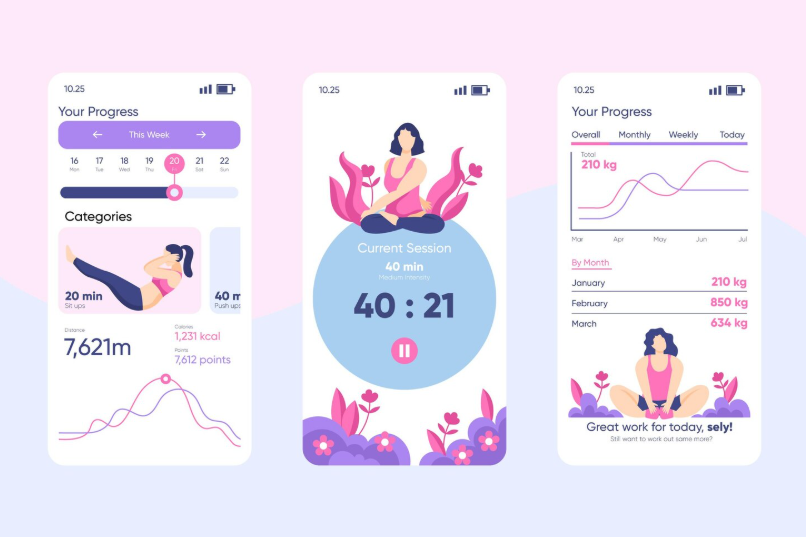

Almost every third person in 2026 uses a fitness or health app at least once. People check their plan, see training progress, count steps and calories, and decide what to do next. It must be fast and easy. If the app feels confusing or annoying, people just close it.
So it’s not about separate features. What’s important is how everything works together in one product. That’s why fitness app trends now focus on keeping things simple and easy to use.
Personal Approach Instead of Universal Programs
One of the main trends is to stop offering the same services to everyone. Users expect the app to adjust to their life pace, their level of training, and even how regularly they exercise.
For example, if a person trains irregularly, the app should offer simpler and shorter sessions instead of pushing complex plans. If a user returns after a break, it makes sense to start with an easy entry, not with intense loads.
Short and Simple Workouts
Another clear trend is short formats. Most modern people are not ready to train for an hour every day. Instead, 10–20 minute workouts with a clear goal work much better: warm-up, maintaining fitness, recovery.
For the product, this means one thing: the path to starting a workout should be as simple as possible. Few clicks, few decisions, no extra screens.
Clear App Logic
The user should not have to think “what should I tap next?”. Successful fitness apps are built in a way that the logic is clear even without extra instructions.
This includes:
If, after finishing a workout, a person taps “Finish workout” and the screen just refreshes without showing results or the next step, that is not a design issue. It’s a product logic issue.
And this is no longer just a 2026 trend, but a basic rule: if a user has to guess how the app works, they already lose.
Focus on Stability and Speed
In 2026, users don’t accept slow or unstable apps. Any delay, freezing, or strange app behavior is frustrating. People lose valuable time and quickly switch to another app they easily find among other popular proposals.
Developers often overlook this problem, especially when the app starts scaling. What “sometimes breaks” with a small user base becomes a serious problem when the app scales. That’s why stability is a basic expectation.
Social Elements Without Pressure
Social features are still a trend, but they’re taking a slightly different shape. They’re becoming softer because people don’t want constant comparison or competition anymore. Instead, they value support, advice, and connection.
What works best:
This helps keep motivation up without creating stress.
Data That Helps, Not Scares
Fitness apps collect a lot of data, but users don’t really care about that. They just want simple answers: am I doing okay, and what should I do next?

Instead of complex graphs, short summaries and clear suggestions work better. For example, instead of a page with lots of heart rate, calories, and pace data, the app can say: “You trained less than usual this week. Let’s add one more 15-minute workout,” or “Your pace is stable, but there is some overload. Tomorrow it’s better to do a light walk or recovery cardio.”
That’s when data actually becomes useful.
Why Testing Your Fitness App Is Critically Important
All these trends lose their value if the app is slow or unstable. That is why digital products need testing. And when we say testing, it does not mean only checking if the interface works and looks nice. You need to step into the user’s place and go through their journey: how a person opens the app, starts a workout, finishes it, and reviews the result.
So, if you are building a product or planning to scale it, follow the recommendations of our detailed guide. It helps you avoid missing important stages of product improvement and keeps focus on small, often overlooked details that still play a role.
What Has Changed in Fitness Apps in 2026
Fitness apps in 2026 are not about complex features or “wow effects” anymore. They are about a simple experience, stable performance, and the feeling that everything is easy to understand from the first opening.
If earlier the focus was on how many features an app has, now it is more important that every action in the app feels clear and fast. Users do not try to figure out the product. They use it and decide whether to stay or leave.
That is why attention to detail, understanding user experience, and continuous testing are part of product development and improvement.
What's Your Reaction?