
24-Inch Vanity Survival Guide: When It’s Perfect

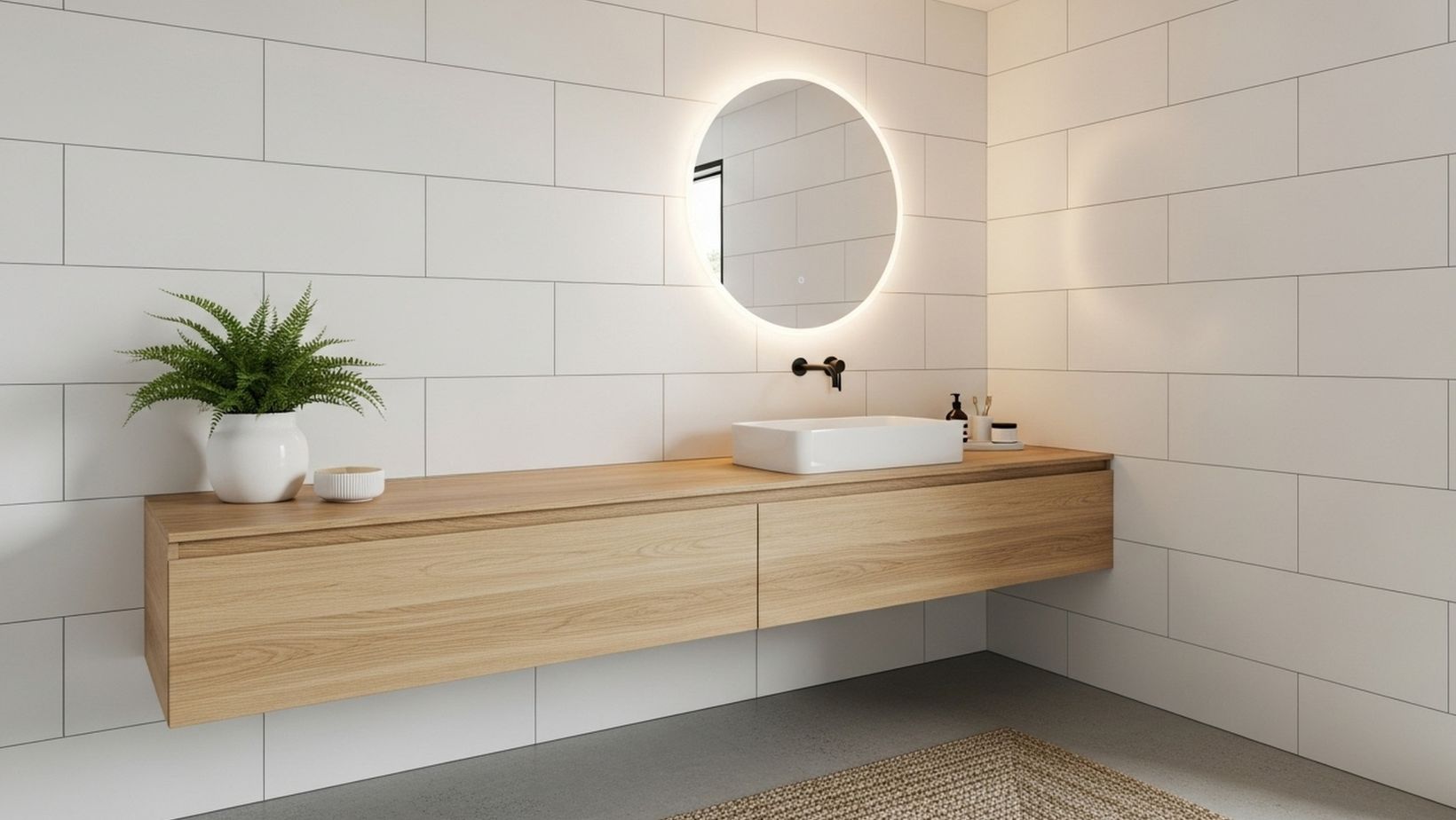

A 24-inch vanity is the most misunderstood size in the bathroom world. Some people install one and wonder why they ever considered anything bigger. Others do the same install and immediately start pricing a 30-inch replacement. The difference is rarely the taste. It is usually layout, depth, and the way the bathroom is used day to day.
Most “24 vs 30” debates are really about one fear: buying something that technically fits but makes the room feel awkward and inconvenient. In small bathrooms, comfort comes from the few inches you keep for moving, turning, opening doors, and standing at the sink without feeling boxed in. That is why a 24 inch bathroom vanity can be brilliant in one home and unbearable in another.
When 24 Inches Is The Right Move, Especially For A Powder Room
A half bath or powder room is where 24 inches shines. These rooms are often narrow, with a door that swings inward, a toilet that takes up visual space, and very limited floor area. In that kind of layout, a larger vanity can steal the walking path and make the room feel like a hallway with plumbing.
A 24-inch vanity works when the bathroom’s main job is simple: quick handwashing, a clean look, and a place to store a few basics. In a powder room, nobody needs a long counter for styling tools, skincare routines, or a lineup of bottles. The priority is ease of movement and a sink that does not fight the door.
It is also a smart choice in older homes where walls are not perfectly square and every inch matters. A smaller vanity can give breathing room around trim, door casings, and corners that would become constant collision points with a wider cabinet.
The biggest advantage of 24 inches is not the cabinet itself. It is what it gives back to the room: space to stand comfortably and space to open the door without doing a sideways shuffle.
The Hidden Dimension That Decides Whether You’ll Love It Or Hate It: Depth
Most people shop by width because it is the number in the title. In real life, depth is often the deal-breaker.
A 24-inch vanity that is standard depth can still feel bulky in a tight bathroom. It can push into the standing area in front of the sink, reduce the sense of openness, and create collisions with doors or drawers. This is why two vanities with the same width can feel completely different once installed.
Shallow-depth models are often the “secret weapon” for tiny layouts. They keep the sink area functional while preserving floor space where you actually move. That extra clearance in front of the vanity is what prevents the bathroom from feeling claustrophobic, especially when you need to turn around, reach for a towel, or help a child wash hands.
Depth also affects splash behavior. A smaller or shallower sink can change where water lands, which matters more than people expect. Repeated water on cabinet edges is one of the fastest paths to wear, swelling, and finish breakdown. If the vanity is shallow, it is worth pairing it with a faucet that does not spray aggressively outward.
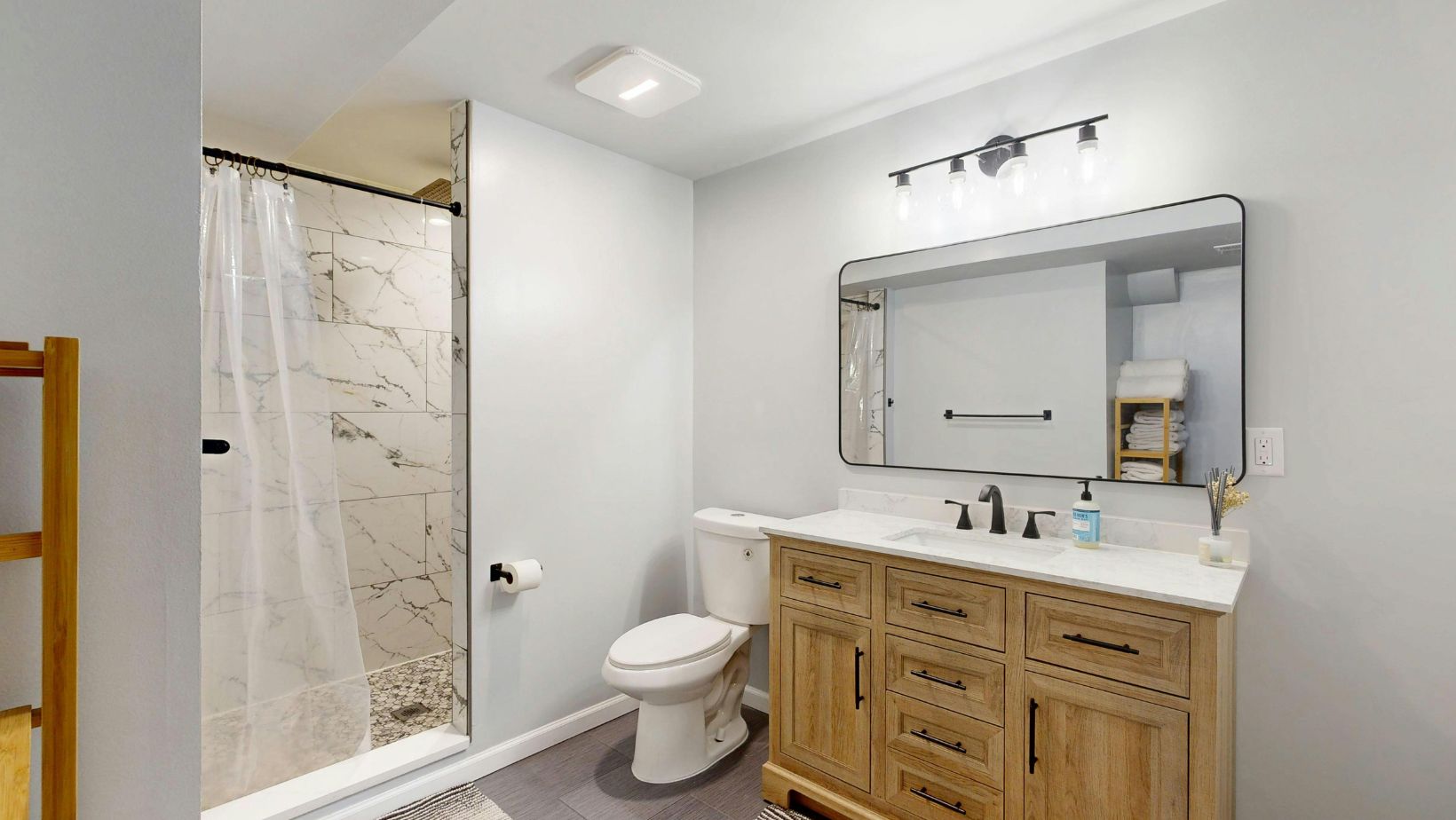
The best way to think about depth is comfort first, storage second. Storage can be supplemented with smart wall solutions. A cramped standing zone cannot be “fixed” after the vanity is installed.
Door Swing And Shower Swing Conflicts That Turn “Fits” Into “Annoying”
A vanity can be the right width and still be wrong because of movement zones. In small bathrooms, what ruins the install is not the footprint. It is the way the room moves.
The bathroom door is the first problem. Many small baths have an inward-swinging door. If the vanity projects into the door’s arc, the door will hit the cabinet or force an awkward partial opening. Even if it clears by a fraction, it can still feel wrong every day.
The shower door can be the second problem. Some shower doors swing outward into the bathroom, especially in compact layouts. If the shower door or glass panel lands too close to the vanity corner, you get daily collisions, reduced entry space, and a room that feels like it was assembled without a plan.
Then there is the “drawer reality.” Some 24-inch vanities use a drawer-like top section that is not fully functional because of plumbing. Others have drawers that pull into the only standing lane in front of the sink. A drawer that opens straight into your knees is the kind of frustration that feels small until you live with it.
The simplest way to avoid these conflicts is to visualize the footprint on the floor and trace the swing arcs. Painter’s tape works because it turns numbers into a real shape you can step around. If the arcs overlap, the problem will not improve with time. A small bathroom does not “break in.” It either functions smoothly or it stays annoying.
Storage Reality: What Actually Fits In A 24-Inch Vanity
This is the part most buyers underestimate.
A 24-inch vanity can be surprisingly limited inside. The sink and plumbing eat into the cabinet volume. Shelving can be awkward. If it is a door-only cabinet, you may end up with a single open cavity that becomes a pile of items unless you add bins or organizers. If it is a drawer model, the drawers can be shallow or split around plumbing in ways that reduce usable space.
In a powder room, that is usually fine. You need soap, a few extra rolls of toilet paper, maybe a candle or cleaning wipes. In a bathroom used daily, it becomes harder. The countertop starts to collect items because the interior cannot comfortably hold everything. And once the counter gets cluttered, the room feels smaller and less calm.
That is why 24 inches often works best when the vanity is not expected to be the only storage point. A recessed medicine cabinet can carry daily essentials without taking floor space. A slim wall cabinet can hold backups. Even a simple shelf can keep the sink area cleaner. Without that second storage point, a 24-inch vanity can feel like it forces everything into view.
There is also a psychological piece. People often want a small vanity so the room feels bigger, but then they fill the counter because there is nowhere else for items to go. The result is the opposite of what they wanted: the room looks busy and feels tight. Planning storage beyond the vanity is what prevents that.
How To Make A 24-Inch Vanity Look Intentional, Not Undersized
A small vanity can look premium. It just needs the right proportions.

The mirror is the most important visual tool. A mirror that is too small makes the vanity look like a scaled-down afterthought. A larger mirror can visually “stretch” the setup and give the wall more presence. It also improves function because it reflects more light and makes the room feel less boxed in.
Lighting matters just as much. Many small bathrooms have one overhead light that creates harsh shadows. Good lighting at the mirror level makes the space feel designed and makes the vanity area more comfortable to use. When the room is well lit, the vanity looks like a deliberate choice rather than the only thing that fit.
Legs versus floating designs can also change the feel. A vanity on legs shows floor under it, which adds visual air and can make a tiny room feel less crowded. A floating vanity can do the same by opening the floor area, but it works best when the silhouette is clean and not overly bulky. If the vanity is floating but deep and heavy-looking, you lose the benefit.
Finish choice also affects perception. Light finishes keep the room bright and forgiving. Dark finishes can look dramatic and expensive, but they need better lighting and cleaner styling. In a tiny bathroom with weak lighting, a very dark vanity can make the space feel smaller unless the mirror and light balance it out.
Five Measurements Most People Skip, And Why They Regret It Later
Small bathrooms punish guessing. This is where 24 inches can either feel perfect or become a daily inconvenience.
- Measure wall-to-wall width at multiple points, not just one spot, because walls can taper and trim or baseboards can change the effective opening
- Measure depth as a lived dimension by checking how much standing space remains between the front of the vanity and the opposite obstacle
- Map door swing arcs for the bathroom door and any shower door so you can see collisions before they exist
- Confirm plumbing location and centerline to avoid drawers or shelves that become unusable after installation
- Check drawer and door clearance against the toilet, trim, and walking path so you do not end up with doors that cannot open fully or drawers that block movement
The “24 vs 30” Decision, In Real-Life Terms
A lot of people ask “Will a 30 fit?” when what they really mean is “Can I live with 24, or will it annoy me?”
If the bathroom is mainly a powder room, 24 inches is often the smarter choice because comfort matters more than storage. If the bathroom is used daily for routines, the question becomes whether the room can support the extra width and depth without creating movement conflicts.
If a 30-inch vanity fits with comfortable clearance, it can feel like a major upgrade. You get more counter space, more storage, and less clutter pressure. But if 30 inches fits only technically and forces tight door swings or cramped standing space, 24 inches will feel better in daily life.
If the room truly needs the storage of a larger vanity but cannot support it, the best solution is not forcing the vanity. It is adding storage vertically. A medicine cabinet, a wall shelf, or a slim cabinet can create the functionality of a larger vanity without sacrificing movement space.
The Bottom Line: 24 Inches Is A Smart Choice When It Matches The Room’s Job
A 24-inch vanity is perfect when the bathroom is tight, the door swing is unforgiving, and the room’s main purpose is quick use without heavy storage demands. It becomes frustrating when it is asked to behave like a larger vanity in a bathroom that supports daily routines, multiple users, and lots of items.
What makes 24 inches succeed is intentional planning: choosing depth wisely, avoiding door and drawer conflicts, and providing a second storage point so the countertop stays clear. When those pieces are in place, 24 inches can feel clean, comfortable, and surprisingly high-end. When they are not, the vanity becomes the thing people want to replace first.
What's Your Reaction?