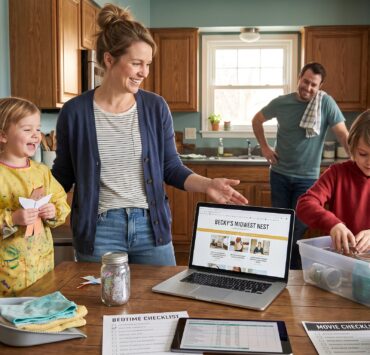
How to Find Family-Friendly Articles on What U Talking Bout Willis



How to Find Family-Friendly Articles on What U Talking Bout Willis is a practical query many parents and caregivers make when planning screen time or weekend reading. This guide shows where to look on the site, how to search and filter results, how to judge an article fast, and how to save pieces that fit family needs. It assumes readers want clear, vetted content for kids, teens, and multigenerational households and keeps steps short and usable.
Key Takeaways
- Start your search on WhatUTalkingBoutWillis.com in the Family or Mom Life sections for reliable family-friendly articles.
- Use specific keywords like “family,” “kids,” or “mom life” combined with topics to filter search results effectively.
- Quickly evaluate articles by reading headlines, first paragraphs, and checking for family-oriented category tags to ensure content suitability.
- Save and organize curated articles in folders or apps with notes on age appropriateness to streamline family reading time.
- Prioritize topics such as parenting tips, DIY crafts, family travel, home hacks, and wellness for the most relevant family content.
Why Family-Friendly Content Matters On Lifestyle And Entertainment Sites
Fact: family-friendly content reduces the risk of exposing children to inappropriate themes. Families choose lifestyle and entertainment sites for recipes, travel tips, DIY projects, and light entertainment. On WhatUTalkingBoutWillis.com, that focus matters because readers expect parenting, home hacks, and wholesome entertainment. A parent planning a road trip wants safe movie picks and packing hacks, not adult humor or graphic topics.
Why this matters in practice: a quick example, a family reads a travel post that includes explicit nightlife recommendations: that one mismatch can erode trust. The site’s tone and category structure aim to prevent that. Parents who prioritize safety can rely on visible cues: category labels like Family, Mom Life, and Home Hacks and a helpful About page that states the site’s family focus. Those cues cut search time and keep family routines calm rather than creating last-minute content checks and awkward content swaps.
Where To Look First: Site Sections And Navigation Tips On WhatUTalkingBoutWillis.com
Answer: start at the site’s main categories and the Family section. On WhatUTalkingBoutWillis.com the navigation lists clear categories: Lifestyle, Home Hacks/Helps, Entertainment, Family, Mom Life, and Wellness. The fastest path is to click Family or Mom Life for parenting-centered content. The About page also clarifies the blog’s mission and tone.
Practical tip: when a reader lands on the homepage, they should scan the top menu and the sidebar for a Family label. If a Family link is present, content there usually avoids strong language and adult themes. Another useful page is the site’s media kit, which outlines audience and content focus: advertisers and parents can infer editorial tone from it. A parent comparing site options might review the media kit to confirm suitability before sharing articles with kids.
Links in this paragraph: use the media kit to check audience fit and the community overview for context. The site contact page also helps if a parent needs to ask about content specifics.
Internal links: media kit | whatutalkingbout, willis, community | whatutalkingboutwillis contact
Search Strategies: Keywords, Filters, And Site Search Tricks
Answer: use combined keywords and the browser site: operator if the internal search is missing. When internal search exists, query terms like “family,” “kids,” “mom life,” “travel with kids,” “DIY,” or “home hacks” narrow results to family-focused posts. If the site search is limited, use Google with site:whatutalkingboutwillis.com plus modifiers. For example, site:whatutalkingboutwillis.com “family” “travel” returns family travel posts.
A specific search trick: add audience words after a topic. Instead of searching “gift ideas,” search “gift ideas kids” or “gift ideas family.” That reduces adult-centered gift guides. Another trick is to combine topic + format: “DIY crafts kids” or “parenting checklist printable.” These compound phrases often surface practical, family-ready articles. For a broader look at this topic, see the family guide.
Practical warning: broad queries like “entertainment” may return nostalgia or meme pieces that are archival and not tailored for children. If the search returns meme or culture archives, refine with “family” or “kid-friendly” to keep results safe. For an organized start, open the site’s complete guide to content and categories to map the site before deep searching.
How To Evaluate An Article Quickly: Simple Criteria For Family-Friendliness
Direct insight: scan topic, tone, and explicit content indicators in under a minute. First, read the headline and the first two paragraphs. They usually reveal whether the piece covers parenting tips, product reviews, or adult subjects. Look for simple language, step-by-step advice, and practical examples, signals of family orientation.
Next, check for red flags: explicit language, mature themes, or promotional content that targets adults only. Also verify the article’s category tag at the top or bottom, Family, Mom Life, or Home Hacks are positive signals. If the post includes a product review, compare the tone to the site’s review standards: trustworthy reviews are balanced and list pros and cons.
Concrete example: a craft post titled “5 summer sidewalk chalk projects for kids” will open with materials and safety notes. A parenting guide will reference ages and supervision. If those details are missing, the article might be more nostalgia or meme content than a family how-to.
Internal links: reference the site’s pillar guide when unsure about categories and content standards.

Curating And Saving Articles For Kids And Family Reading
Key fact: saving curated, prechecked articles reduces friction during family time. A simple workflow works: pick articles from Family and Home Hacks, verify them quickly using the evaluation checklist, then save links to a folder or print them for offline reading. Parents who do this save time and avoid surprises.
Tools and tactics: create a browser bookmark folder named “Family Reads” or use a read-it-later app. For younger kids, print selected crafts and highlight safety steps. For travel, save packing checklists and printable activity lists so a parent doesn’t scramble at a rest stop. Also add short notes about age suitability next to saved items.
Practical admonition: supervision still matters. Even family-labeled posts may include linked content that points to outside resources. When saving an article, quickly scan its outgoing links. If a parent wants an all-in-one resource, the site’s content guide can help pick the most reliable sections to curate.
Recommended Topics And Example Article Types To Prioritize
Answer: prioritize parenting tips, DIY crafts, family travel, home hacks, wellness, and gift guides. These categories match WhatUTalkingBoutWillis.com’s strengths and the family audience’s needs. Example article types include age-specific activity lists (e.g., “10 indoor rainy-day crafts for 5–8 year olds”), travel packing lists that name exact items and quantities, and product roundups with clear safety notes.
Specific examples that work well: seasonal gift guides that list items under $50 with links to purchase and age brackets: step-by-step DIY projects with materials lists and completion times: wellness posts that explain routines and cite practical metrics (e.g., “saves 3 hours per week” when describing a morning routine tweak). These precise details make content usable immediately.
Helpful links: when choosing gift guides or product roundups, compare them to the site’s review criteria and the complete content overview. For gift-focused lists under a price threshold, external curated lists can verify ideas and price ranges.
Conclusion
Takeaway: readers find family-friendly articles fastest by starting with the Family section, using precise search phrases, and applying quick evaluation checks. Curating saved articles and choosing the recommended topics keeps family time calm and intentional. The site’s content guide and related pages help map the best sections and confirm tone for all ages.