
How to Plan Family Activities for Different Ages

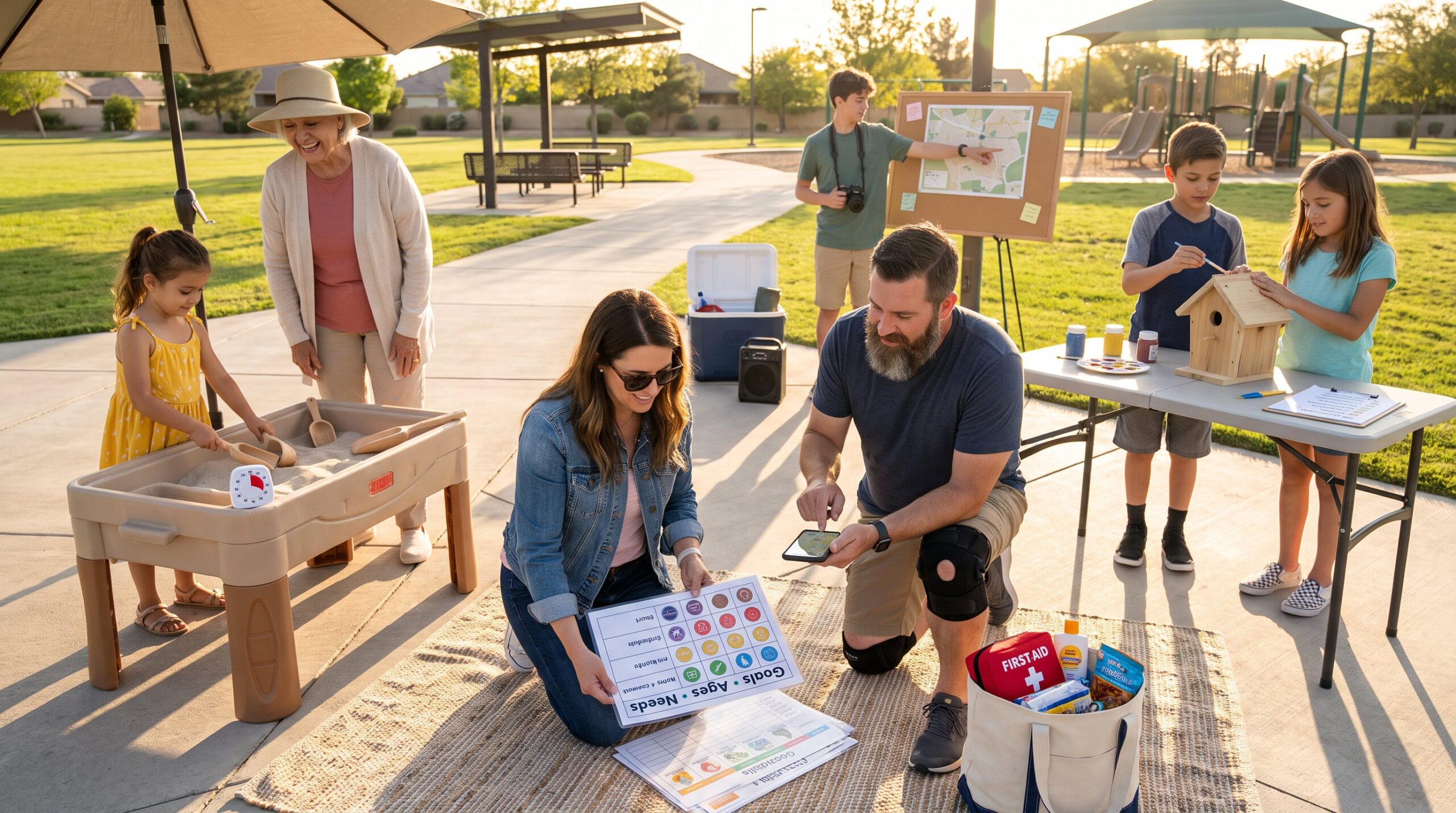

How to plan family activities for different ages starts with one clear fact: aligning activities to development, energy, and safety cuts fights and boosts participation. This guide shows practical steps and concrete ideas for toddlers through teens and adults. It focuses on goals, realistic schedules, safety checks, and age‑tailored examples that families can try this weekend.
Key Takeaways
- How to plan family activities for different ages starts with assessing each member’s development, energy, and safety needs to reduce conflicts and boost participation.
- Creating a clear goal and a chart of family members’ ages, interests, and limits guides practical, inclusive activity choices.
- Mixing high-energy and low-key segments with buffer times ensures smooth transitions and maintains engagement across all ages.
- Toddlers benefit from short, sensory-rich activities lasting 10–30 minutes to match their focus and safety requirements.
- Children aged 6–12 thrive with active, creative tasks that build skills, such as bike rides, cooking projects, and strategic games.
- Teens appreciate autonomy and leadership roles; offering flexible, meaningful activities encourages their involvement and multigenerational harmony.
Why Age‑Smart Planning Matters For Family Harmony
Age‑smart planning matters because people of different ages have different bodies, attention spans, and sensory needs. Start with the answer: matching activities to age reduces conflict and increases participation. For example, a two‑year‑old will tire after 20 minutes of focused play: a 12‑year‑old may need 45–60 minutes to feel mastered. That gap explains why one trip can feel perfect to one person and miserable to another.
Once families accept those differences, they can design layered experiences: short sensory stations for toddlers, a creative challenge for school‑agers, and a higher‑autonomy role for teens. This reduces meltdowns and keeps adults engaged rather than exhausted. Practical evidence supports this: planning for developmental needs and mobility constraints improves safety and enjoyment across generations. The result is smoother outings, better memories, and more repeatable traditions.
Set Clear Goals And Assess Your Family’s Ages, Interests, And Limits
Answer first: define one priority, connection, learning, or exercise, before picking activities. A clear goal guides choices and sets expectations. Next, create a quick chart listing each person’s age, interests, mobility limits, and sensory sensitivities. Example: “Maya (4): loves water, 15–20 min focus, allergic to bee stings. Dad: knee pain.”
That chart leads to practical decisions: choose venues with shade and seating if an elder has mobility limits: pick short, sensory‑rich tasks for toddlers: plan a leadership role for teens who like photography. Families that inventory needs upfront avoid last‑minute exclusions.
For inspiration and structure, families can consult a short blog guide to see how lifestyle content can be organized into useful clusters. Use the chart to assign two fallback options and one must‑have element (snack, quiet spot, or charger). That keeps the day resilient when plans change.
Practical Scheduling And Safety Tips For Mixed‑Age Outings
Direct answer: combine high‑energy and low‑key segments and build buffer time between them. Start with a 20–30 minute active block (playground, relay game), then move to a quieter activity (story time, craft) to let toddlers rest and elders recover.
Specific safety steps matter: keep youngest children within arm’s reach in crowds, review a single, simple safety rule before arrival (stay with the group), and set a visible meeting point. Verify venue accessibility, restroom locations, and first‑aid stations ahead of time. If camping is on the list, review focused camping tips to cover gear and emergency basics.
Schedule buffers of 10–20 minutes between transitions. Those minutes absorb bathroom breaks, snack disputes, and stroller adjustments. Pack a small emergency kit, bandages, sunblock, spare socks, and appoint one adult as the float: they handle quick issues so others stay present. This simple structure keeps mixed groups moving without tension.
Activity Ideas For Ages 0–5: Simple, Safe, Sensory‑Rich Options
Fact first: toddlers need short, sensory‑rich activities with clear safety measures. Recommended activities last 10–30 minutes and emphasize touch, sound, and safe exploration.
Concrete ideas:
- Sand and water play: set up a shallow tub, measuring cups, and a towel. Limit time to 20 minutes to prevent sensory overload.
- Sensory bins: rice, large beads, and spoons in a shallow box. Supervise constantly: use non‑toxic materials.
- Short nature scavenger walk: look for three colors, two leaves, and one feather. Keep distances under 500 meters.
- Museum or library story time: choose programs labeled 0–5 and sit near exits for quick departures.
Parents report that these activities calm toddlers and give adults predictable windows to engage. For more toddler activity ideas and printable resources, explore the site’s kids activities collection for ready‑to‑use options and templates.
Activity Ideas For Ages 6–12: Active, Creative, And Skill‑Building Choices
Answer up front: ages 6–12 benefit from activities that combine movement, creativity, and a clear skill outcome. These kids enjoy 30–75 minute projects that end in a tangible result.

Practical options:
- Family bike rides or easy hikes with a simple map and checkpoints. Set checkpoints every 20–30 minutes so kids can measure progress.
- Cooking or baking project: assign each child a task, measure, mix, time, so they practice math and sequencing.
- Scavenger hunts with photo evidence: use a phone camera to collect five specific items or scenes.
- Building projects: simple birdhouses or LEGO challenges where siblings collaborate.
- Board games that require strategy and teamwork (ages printed on box). Limit sessions to one hour to avoid fatigue.
These activities build competence and give mid‑childhood kids leadership chances. Families seeking craft prompts or trustworthy product reviews can link projects to guidance in a short piece on what makes a review reliable via the site’s review advice. That helps pick age‑appropriate kits and tools.
Activities For Teens And Multigenerational Groups: Flexibility, Autonomy, And Shared Experiences
Start with the core insight: teens value autonomy and meaningful roles. Offer options that let teens opt in, lead, or mentor. For multigenerational success, layer activities so each age finds a role.
Actionable examples:
- Shared cooking night where teens lead a course, kids set the table, and elders judge flavor. Assign timed tasks and one tech role: playlist or photo documentation.
- Destination days with split intensities: a museum for adults and kids while teens roam a connected district with a mapped route. Agree on check‑in times and a meeting cafe.
- Service projects: community garden work where physical tasks scale by ability: teens handle heavier lifting, little ones water plants.
- Projects that give teens responsibility: let them plan a 90‑minute outing, manage the budget, and take photos for a family album.
Practical warning: teens who feel micromanaged withdraw. Instead, set clear safety boundaries and then hand over the plan. For ideas on finding family‑friendly content and articles that match different tastes, consult the site’s finding articles hub to surface age‑appropriate reads.
Conclusion
Planning by age, ability, and goal creates safer, more enjoyable family time. Use short charts, layered activities, and buffers to manage transitions. When teens lead, toddlers have sensory stations, and adults hold safety roles, everyone participates more and argues less. For ongoing inspiration and archived ideas, the site’s family archives hold practical posts and seasonal lists to plan future outings.