That Patch Looks Perfect Until the Afternoon Sun Hits It


You filled the hole, sanded it flat, rolled on two coats of the leftover paint and stepped back feeling pretty good about yourself. Then around four in the afternoon the sun came through the west window at a low angle, and there it was: a soft oval shadow the size of a dinner plate.
Nothing went wrong, exactly. The patch is solid. It just isn't flat, and light is very good at finding that out.
Raking Light Is the Honest Inspector
Walls almost never get judged under the conditions they were repaired in. You work up close with a light more or less above you, which flattens everything and hides the shoulders of a patch. Then the room goes back into service under lamps, pot lights and low winter sun, all of which throw light across the wall rather than at it.
That's raking light, and it turns a half-millimetre ridge into a visible line. A patch doesn't have to be bad to fail. It only has to sit slightly proud of the surrounding wall, or carry a ring of sanding scratches around its edge.
Feathering Is Most of the Skill
Amateurs treat the hole as the job. Professionals treat the area around the hole as the job.
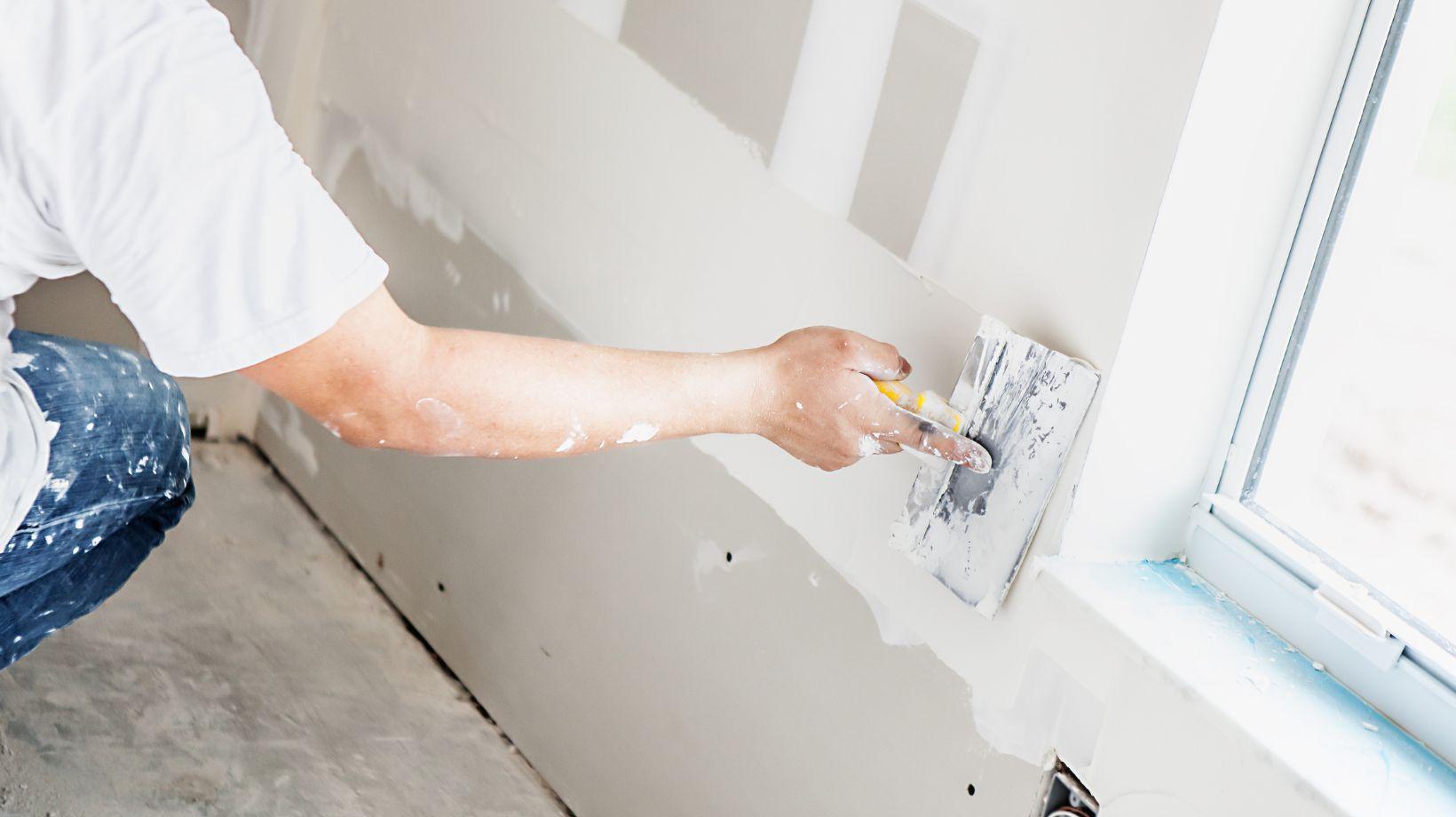
A proper repair builds compound in thin coats, each one wider than the last, so the patch climbs back to the wall plane over 25 or 30 centimetres instead of five. The first coat embeds the tape or mesh. The second widens and fills. The third goes on thin and broad, knifed off with a wide blade until its outer edges are barely there.
Each coat has to dry fully before the next goes on. Rushing it is probably the most common reason a home repair cracks a month later: compound still damp underneath keeps moving after the paint is on.
The sanding follows the same logic. You're not flattening the patch. You're erasing its edges.
Texture Is Its Own Problem
Most walls aren't perfectly smooth. They carry a roller stipple, a light knockdown, or in older Toronto homes a plaster texture with direction to it. A glass-smooth patch in the middle of a stippled wall can read worse than the damage did, because the eye catches the flat spot instantly.
Matching means reproducing the pattern and its depth, usually with a particular roller nap, a sponge, or thinned compound knocked back. It's why the same repair vanishes in one house and announces itself in the next.
The Step Nearly Everyone Skips
Joint compound is far more porous than painted drywall. Roll your finish coat straight over it and the compound drinks the binder out of the paint, leaving a duller sheen exactly where the repair is. Painters call it flashing, and in the eggshell or satin most living rooms use, it's obvious from the doorway.
Priming the patch first seals that porosity so the topcoat lies down evenly across old surface and new. The colour was never the issue. The sheen is what gives you away.
When the Same Crack Keeps Coming Back
Some cracks aren't repair problems at all. They're symptoms.
A hairline that returns to the same spot every year is telling you something about the building. Diagonal cracks off a door or window corner usually point to settlement or framing movement, since the opening is the weak spot. Patch it all you like; it holds only once the movement stops.
Seasonal cracking is different. Framing lumber takes on and gives up moisture, and the swing from a humid Toronto August to a dry February is brutal on a house. Health Canada recommends keeping indoor relative humidity between 30% and 50%, and homes that spend the winter well below that range move more than they should.

Then there's truss uplift, which catches out owners of bungalows and newer subdivision homes. The bottom chord of a roof truss sits buried in attic insulation, warmer and damper, while the upper chords are exposed to cold, dry attic air. In deep winter the truss arches upward and lifts the ceiling off the interior partition walls it isn't fastened to, opening a gap along the wall-to-ceiling joint that closes again when the weather turns.
Fill that gap with compound and you're guaranteed a fresh crack next February. The real fix is mechanical, and a finisher who's seen it before will tell you so.
Water Damage Is Where Patching Stops Being the Answer
A brown ring on the ceiling under a bathroom isn't a cosmetic problem with a cosmetic fix. Two questions come first: has the leak actually been stopped, and how long was the material wet?
The second matters more than people expect. The same Health Canada guidance notes that mould can begin growing in an area with excess moisture within 48 hours, and that where mould has taken hold behind the paint, the drywall needs to be removed and replaced rather than cleaned.
Soaked drywall also loses structure. The gypsum core softens, the paper facing lets go, and the board sags under thumb pressure. Skim over that and it looks fine for a season before it telegraphs through. Cutting the wet section back to dry framing is almost always cheaper than doing the job twice.
What You’re Actually Paying For
The materials in a drywall repair are trivial: a bag of compound and a sheet of board cost less than takeout for two. What you're buying from a crew like drywall repair by Patch Dudes is the diagnosis and the finish: whether the crack is cosmetic or structural, whether the board can stay, how wide to feather, and how to make the repair vanish under the light the room actually gets.
That last part is the whole test. A repair isn't finished when the hole is gone. It's finished when you can't find it at four in the afternoon.
What's Your Reaction?