
LASIK is not the only option (so choose with confidence)



Vision correction is personal, and, due to the rich experience of Andrew Lewicky, M.D. from Chicago Arbor Eye Institute, that is why an eye doctor in Chicago is often searched by people who are tired of guessing which procedure fits their eyes and their life. Some people want to stop fogging glasses in winter. Some people want to stop feeling dependent on contact lenses. Some people want options they did not know existed. Published refractive-surgery decision-aid research reflects that same reality: recommendations work best when they are matched to a person’s medical history and preferences rather than pushed as a one-size-fits-all menu. [1][2]
Start with what you want your vision to do
Goals lead the plan. Driving at night is a goal. Screen comfort is a goal. Sports performance is a goal. Reading without readers is a goal. The EyeChoose decision-aid studies explicitly built recommendations around medical history, personal preferences, and the information people actually want when comparing procedures. [1][2]
The right procedure fits your Tuesday, not your fantasy.
Candidacy is safety, not a sales pitch
Candidacy depends on whether the eye is actually a safe fit for a procedure. In post-LASIK ectasia research, preoperative risk assessment focused on factors such as corneal topography and tomography, pachymetry, and other ectasia-risk indices, underscoring that screening is about protecting long-term vision, not just clearing someone for surgery quickly. [3]
Candidacy is safety, not a sales pitch.
LASIK, PRK, and lens-based options (how to compare)
LASIK reshapes the cornea to correct refractive error and has become widely adopted in part because of its fast recovery and predictable outcomes. [4]
PRK also reshapes the cornea, but without creating a flap, and it can be preferable in some eyes and lifestyles, even though recovery is usually slower. [5]
Refractive lens exchange is a different category entirely: it replaces the natural lens with an intraocular lens and is used especially for some presbyopic patients and for people who are not suitable for laser correction. [6]
More options do not mean more confusion when the evaluation is thorough.
Technology helps, but expectations decide happiness
Technology supports precision, but expectations drive satisfaction. A large literature review found that, worldwide, an average of 95.4% of patients were satisfied after LASIK. [7]
That does not mean every good candidate wants the same procedure, and it does not mean decision-making should ignore trade-offs. In the EyeChoose evaluation study, participants specifically asked for more detail on pricing, effectiveness, and reversibility, which is a useful reminder that satisfaction depends on understanding what you are choosing. [2]
Expectations are part of the prescription.
When lens-based options enter the conversation, imaging matters too
For patients considering lens-based surgery, careful imaging can sharpen expectations. A systematic review and meta-analysis found that OCT screening before cataract surgery detected occult macular pathology that could influence postoperative visual outcomes in about 13.7% of eyes, and concluded that OCT screening should be considered in the routine preoperative workup. [8]
In plain terms, better imaging can prevent a technically successful procedure from turning into a disappointing visual result.
What recovery feels like when it is going well
Recovery varies by procedure and by patient. LASIK is known for quicker recovery, while PRK is associated with slower epithelial healing and a more gradual visual recovery. [4][5]
The goal is not to be brave. The goal is to be prepared for what the first days and weeks will realistically feel like. Recovery is part of the result, not a separate chapter.
Cost talk should feel straightforward
Cost talk belongs in healthcare decisions because access affects outcomes. The EyeChoose evaluation study found that users wanted more information about pricing alongside effectiveness and reversibility, which supports making cost part of the consultation instead of treating it like an awkward extra. [2]
Money questions are health questions when they affect access to care.
The next step that makes the decision easier
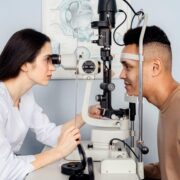
The next step is a candidacy-focused evaluation. It should answer what you are eligible for, what benefits you can realistically expect, what trade-offs you are accepting, and what recovery looks like in your actual calendar. The safest option is the one that matches both your anatomy and your goals. [1][2][3][4][5][6][8]

References
[1] Bhavani Subbaraman, Kamran Ahmed, Matthew Heller, Alison C. Essary, Vimla L. Patel, and Dongwen Wang, “Development of a Patient Decision Aid for Refractive Eye Surgery,” April 29, 2023.
[2] Bhavani Subbaraman, Kamran Ahmed, Matthew Heller, Alison C. Essary, Vimla L. Patel, and Dongwen Wang, “Evaluation of a Patient Decision Aid for Refractive Eye Surgery,” January 2024 (epub December 8, 2023).
[3] Mohamed Tarek El-Naggar, Rania Serag Elkitkat, Hossam El-Din Ziada, Louise Pellegrino Gomes Esporcatte, and Renato Ambrósio Jr, “Assessment of Preoperative Risk Factors for Post-LASIK Ectasia Development,” December 4, 2023.
[4] Majid Moshirfar, Phillip Bennett, and Yasmyne Ronquillo, “Laser In Situ Keratomileusis (LASIK),” updated July 24, 2023.
[5] Shaan N. Somani, Bharat Gurnani, and Bhupendra C. Patel, “Photorefractive Keratectomy,” updated September 14, 2025.
[6] Luci Kaweri, Chandrashekhar Wavikar, Edwin James, Payal Pandit, and Namrata Bhuta, “Review of current status of refractive lens exchange and role of dysfunctional lens index as its new indication,” December 2020.
[7] Kerry D. Solomon, Luis E. Fernández de Castro, Helga P. Sandoval, Joseph M. Biber, Brian Groat, Kristiana D. Neff, Michelle S. Ying, John W. French, Eric D. Donnenfeld, and Richard L. Lindstrom, “LASIK world literature review: quality of life and patient satisfaction,” April 2009.
[8] Taimur M. Ahmed, Zia Farrukh Ahmed, and Riaz Qureshi, “Optical coherence tomography as a diagnostic intervention before cataract surgery-a review,” 2023 (systematic review and meta-analysis; PubMed record dated 2022).