
The MLS Has Been Growing: Can the 2026 FIFA World Cup Provide an Even Greater Boost?


If you are not a stakeholder, as they say, it’s hard to feel about association football. Soccer, as we call it in America. Yes, the figures are promising growth, and there’s all this campaigning about the soul of the game being distributed among the members of the global fandom. The beautiful game.
The 2026 FIFA™ World Cup is nearing. It has always been jubilation, hasn’t it? Even when talking about Qatar’s humanitarian shortcomings. Even when talking about the cynicism of its monetization and the aggressive pursuit of profit. It’s always been about hope for the sport. About the creativity on the pitch and the power of human possibilities.
As we look at this upcoming edition (as of March 2026), we must do our utmost to look into our hearts and say: I am excited about what’s to come! It’s the biggest stage of the sport’s biggest event! Why wouldn’t I be?
Oh, how easy it is to come up with counterarguments. A microscopic portion of them is already in this article’s intro. But to that, we say today, not now. Not with this. This piece is where we’ll talk about optimism.
We’ll do so through the lens of Major League Soccer: a project of opportunity and the possibility to provide Americans with a high-level window into the mesmerizing brilliance of a united passion played on a grass field.
For all that is to happen, the 2026 World Cup promises what we’ve always wanted from this competition: access to the most heartfelt moments in football. A peak of identity success and a unifying core of what we’ve been wishing: to live an uplifting historical moment.
This article will analyze why the World Cup has a chance to raise the profile of the game even more than it has throughout the 21st century. Let’s begin.
Let’s Start With The MLS Model (By The Numbers)!
1994 And Its Echoes

The year was 1988. At the 46th FIFA Congress that year, the vote was held for the hosting of the 1994 edition of the men’s World Cup. There hadn’t been any significant domestic soccer in the USA since the NASL folded in 1984. In all fairness, there was no logic in legitimately awarding America the hosting rights.
That is, apart from the fact that the country was huge, sports-crazed, and certainly full of infrastructure that would support such an event without any worries. But there needed to be prerequisites, and one of the most important ones was the re-establishment of a proper league.
Enter Major League Soccer: founded in 1993, operational since 1996. America kept its word to create a developed domestic system, which allowed the USA soccer to develop players and become competitive.
It just so happened that the 1994 edition of the World Cup was a success. Latin American countries and, very interestingly, Eastern European countries were revelations that showed the USA that the entire world was ready to produce amazing talents and incredible squads. Why wouldn’t the mighty America be able to do so?
As It Currently Stands
The MLS has been the main conduit for this long and arduous process to take shape. New cities, shape-shifting branding, and a swath of money went around. This is how we’ve gotten ot a place where, in the last 5 years, American cash has been bankrolling not just the internal game, but also elite clubs throughout Europe. Lucrative business, it is.
There are numerous numbers that would support and suggest the premise that the MLS has grown astronomically. This is a fascinating scenario playing right as the World Cup of 2026 is about to take shape, and we are all in a position to see if there is further growth. The numbers look as such:
- Attendance has grown very much so since 2022, recording a 12% increase when compared to a few years ago. Bespoke stadia and cheaper tickets when compared to other major sports, per reports. This proves that people have been clamoring to see live games because they understand them to be worth it.
- Revenue, through the lens of a CAGR growth of 14%, has steadily climbed since the COVID-19 pandemic. Its aggregate numbers have neared the $150 million mark in 2024, showing an increased money-making potential for those holding equity in these franchises.
- Evaluations for expansion teams have risen dramatically. The pre-COVID entry of FC Cincinnati was at a mere $150 fee, while two years later, Charlotte FC came to be via a $325 million retainer. The most recent expansion team was San Diego FC, which cost $500 million. A hefty price, but for a team placed in a market whose demographic loves soccer.
His Name Is His Name
These are just data points that show tangible interest and business dealings that follow a level of hope that the game will continue to grow.
However, we need to say it: Lionel Messi. He won the World Cup, broke the internet with the most liked Instagram post ever, and then signed for Inter Miami. Flashy kits, a vibrant market, and an Argentino dropped into one of the USA’s premier Latino hotbeds.
The surge in popularity for the (soon to be in) Freedom Park club soared astronomically, which is something that is worth expecting given the commanding presence of soccer’s biggest (or second biggest) name in the 21st century.
Millions took to the streets of Buenos Aires after the final with France, and millions took to social media to follow Leo’s new club. Since the arguable G.O.A.T. himself chose the MLS, why wouldn’t his fans follow him in this level of interest?
Well, Messi’s presence, along with other star signings made since, led to better performances for Inter Miami, but also a valuation rise for the club. In 2025, the franchise almost jumped to the $1.2 billion mark, more than double what it was worth in 2022.
The 2026 World Cup, For All Its Woes, Seems Like A Boon Waiting To Happen
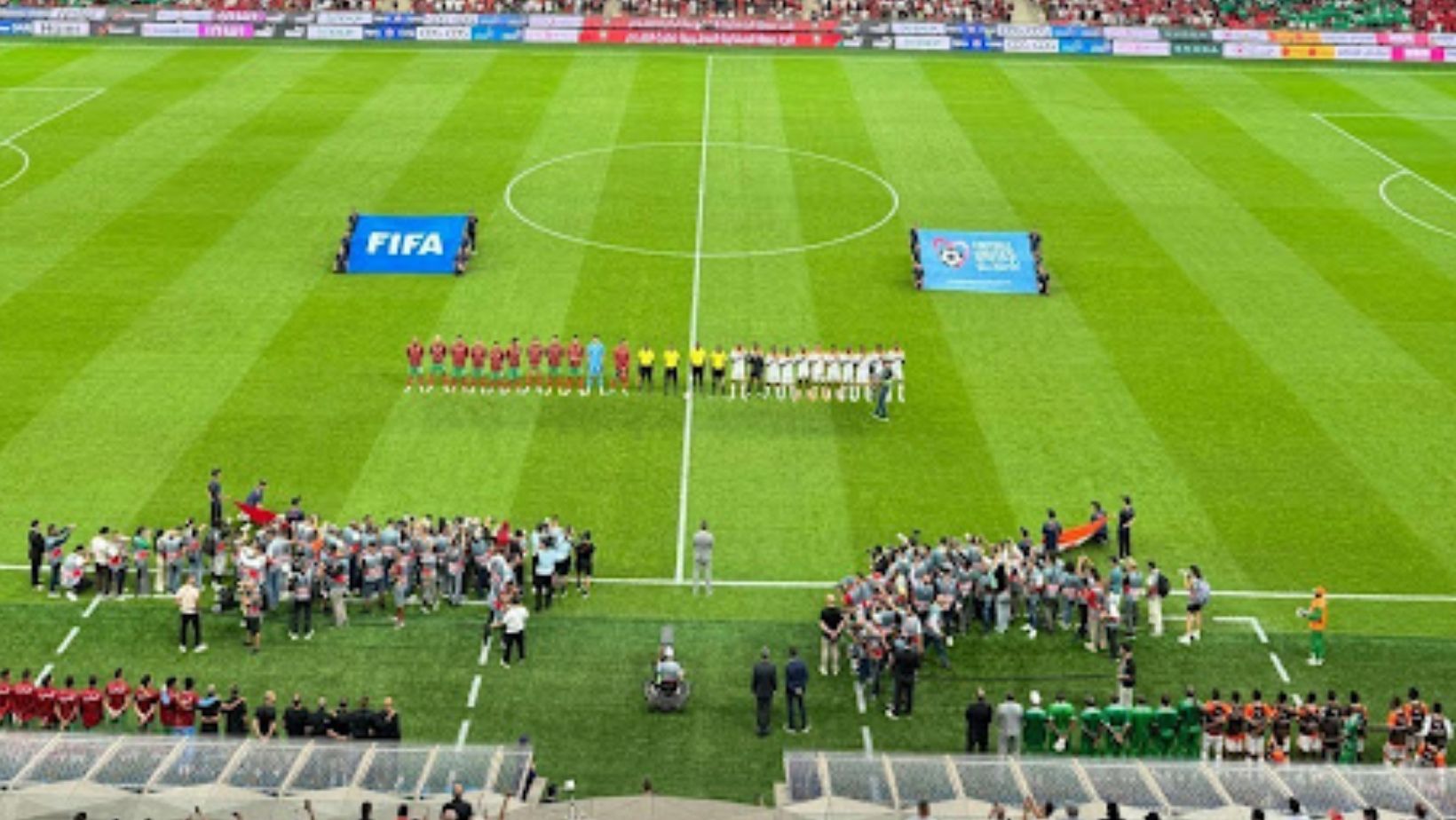
One of the most interesting aspects of the 2026 World Cup is its sheer size. We’re not talking about the hype or the technological wonders that are closely associated with it, such as FIFA’s partnership with Lenovo for bespoke AI models that would supposedly improve fan experience.
Instead, we are talking about the format of the Cup. Its participants rose from 32 teams to 48, properly representing even more nationalities around the world. This has led to a total of 104 matches, the majority of which will be happening in the USA, across 11 cities.
This is where we need to remind ourselves that we may be talking a bit too much about the USA rather than the entire North American continent. After all, Canada hosts too, not to mention this being the third foray for Mexico as a World Cup host.
What this can lead to is a global interest in American soccer. Rather than the Cup being just an opportunity for Americans to further develop an interest in a sport, it can be an opportunity for more people worldwide to gain an interest in what the USA has going for it in terms of soccer.
This may sound redundant, but there is value in that. Yes, global stars like Son, Muller, and Messi (along with his old Barcelona pals who joined him in South Florida) bring more visibility, but bringing the premier soccer event to a liminal space where you can market the MLS is a golden opportunity. And now, propagation is much easier.
The highest level of association football happening on American soil and, very importantly, in American time zones can attract even more eyes across the states. For those around the world, seeing a reminder of the MLS every now and then can be a deciding factor in interest.
The Life Of Association Football Beyond Analytics…
We are in a craze to find the margin. Profit, efficiency, streamlining, data-driven, and all that verbiage that can be sickening sometimes. It’s all about finding the late-stage valuation of every single aspect that goes into everything ever. Soccer makes a lot of money and thrives off competition, so it’s certainly going to follow the same plot.
It has been doing it. But why are we talking about this in the context of this article? Is it clutter?
No. It’s a kind reminder, as you might’ve heard plenty of times in the last few years, that this sport is about showing magic in real time. It’s about an outrageous dribble, a screamer of a goal, and a legendary moment of brilliance and resilience.
Americans are very aware of this feeling. Seeing a buzzer beater in real time, a one-handed catch in the end zone to seal a game, a home run to rule them all. The USA’s sports scene understands the magnitude of a moment, especially when the stakes are high.

During the World Cup, the margins are at their slimmest. There is no next year. Some players might have only one shot at this trophy throughout their careers. Others may see their only participation through their time on the pitch. For those at home, it may be the first World Cup in which their national team participates, especially during their lifetime.
Yes, the event happens every four years, but the wait is absolutely maddening for those with hopes and dreams. This magnifies the moment. Each game, each half, each penalty shootout brings forth a new opportunity to achieve legendary status. To enshrine emotion on that pitch.
Beyond the margin, the MLS can be a passive winner if the football is good. If it’s great, then it’s even more of an opportunity.
We all need to remember that, once we see something mesmerizing with our own two eyes, we want to recapture that again, and again, and again. If an American watching the MLS sees it with their own eyes, perhaps in the stadium, why wouldn’t they pursue that emotion for the love of the game?
We Always Need To Talk About Sports Betting. How Do We Feel About It?
Yes, sports betting is the real power broker these days. Yes, we need to talk about it. No, it will not go away, even if you think that it has eroded whatever sense of moral purity was there in the sport.
This is your reminder that corruption has always been deep in the fabric of this sport. For its stratification across numerous levels of influence, power, and financial might, soccer’s lower tiers have always been plagued by nefarious deeds that have created a sense of uncertainty around its legitimacy.
Even high-level soccer has had issues of the sort in the 21st century. We’re not talking about cases like the Agnelli’s Juventus disgracing revelation of financial foul play, or about the Blatter-Platini fall from grace. We are talking about things as petty as the Calciopoli scandal.
Sports betting has always been here, associated with the sport, tied at the hip with its money-making ability. The only difference is that it has emerged from the shadows and turned from a racket into a legitimate business. Legitimacy comes from its legal status.
There will be a lot of promotional material and an immense slew of marketing funds poured into betting opportunities on the World Cup. If the market sees you as an interested soccer fan from the USA (in a state where sports betting is legal), it will push its product because the World Cup is a prime opportunity for it.
But once this event ends, what do you bet on? Perhaps you enjoyed wagering on this sport. Maybe you are good at it and won big. If the MLS is the closest thing to you in terms of betting opportunities, why wouldn’t you opt for it? Gambling on this competition is already surprisingly popular, as the analysis model of betonvalue tells us.
That would mean actually watching the games. The on-pitch product wins your attention, even if it comes via betting.
Conclusion: Where Is The Hope For This Sport Coming From?
The love for the game may be the purest answer. Business opportunities may be the most realistic ones. Something to distract ourselves from may be the most visceral one. After all, soccer is entertainment, and so are sports. And entertainment is an industry.
But, we have to ask, must it be all for fun? Is there not a higher calling for loving sports? Any of them? Is there not gratification, or adulation of human achievement, or a sense of community hoping for the same goal?
After all, empathizing over anything and everything is in our human nature. The FIFA World Cup is but a global conduit that manages to make a lot of money and attract a lot of attention. The game is what makes it worthwhile.
The MLS, for all its flaws and promises, is still a method to watch, love, and understand the game. If the World Cup can deliver a premise about the core importance of soccer, the MLS can stand to benefit by reminding its viewers what it means to love this sport.
What's Your Reaction?