
The Quiet Rituals of a Well-Designed Bathroom: Creating Space for Slow Living

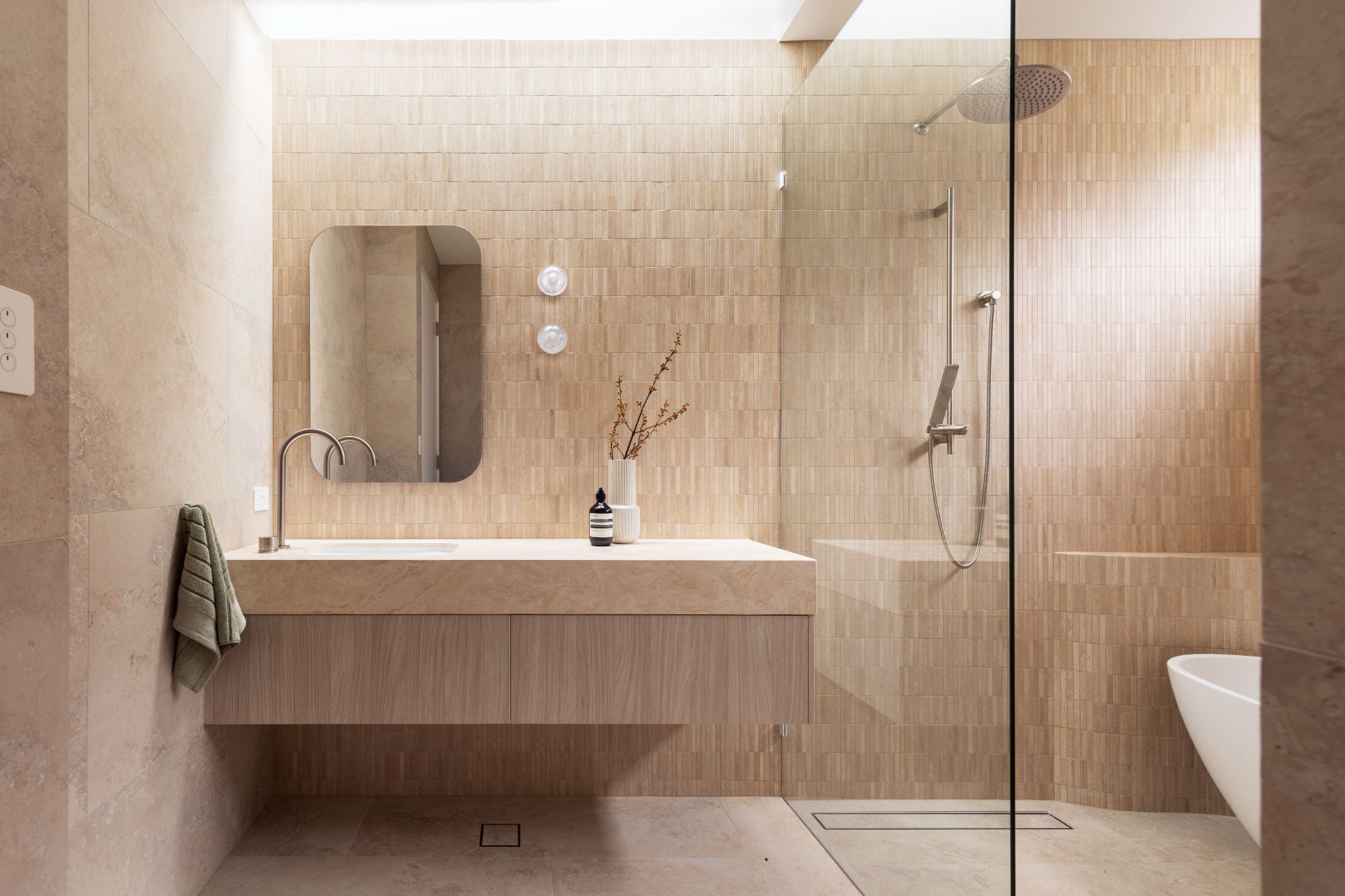

There are two moments in the day that belong entirely to you: the first few minutes of the morning and the last stretch of the evening. Both tend to unfold in the same room, the bathroom. This is where you wash your face before the day begins and again under water as it ends. These moments shape how you feel, and the space in which they happen matters more than most people realise.
The bathroom is also one of the few spaces that asks nothing of you, offering a sense of private sanctuary. Privacy is easy to overlook, but it is what makes this space worth designing with care.
Designing for Stillness
A resourceful bathroom is not the same as one that feels right. Efficiency is easy to achieve, whether through a well-placed shelf, sufficient light, or a properly closing door. Creating a sense of calm is something else entirely, shaped as much by what is left out as by what is put in.
Visual quiet makes a difference with surfaces that do not compete for attention, open counter space that does not demand constant organisation, and a colour palette that settles the eye rather than stimulates it. The goal is not emptiness, but breathing room, a space that feels unhurried even when you are not.
Let There Be Light
Light changes a bathroom more than almost any other element, yet it is often overlooked. Harsh overhead lighting flattens everything, while soft, diffused light opens up the space, making it feel warmer and more forgiving.
Natural light is ideal when it is available, like the way morning sun moves across tile and the gradual shift from bright to golden as the afternoon fades. Mirrors extend that light further, doubling what is already there and creating depth even in the smallest rooms. When artificial light is needed, warmth matters most, with a soft glow at eye level feeling more natural than brightness from above.
The Vanity as a Daily Touchpoint
Of all the elements in a bathroom, the vanity is the one you interact with most. It is where morning routines begin and where you wind down before bed.
A thoughtfully designed bathroom vanity becomes part of these daily rituals, supporting both functionality and a sense of calm without drawing attention to itself. When ABI Interiors approaches vanity design, the emphasis is on balancing form and function, with products that feel considered rather than decorative. Clean, minimal lines and integrated storage help reduce visual clutter, resulting in something you reach for every day without thinking, because it simply works and quietly contributes to a cohesive, well-resolved space.
Designing for Ritual, Not Routine
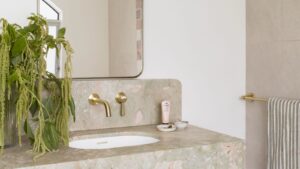
There is a difference between a routine and a ritual. A routine is something you move through on autopilot, while a ritual carries intention and asks you to be present, even briefly.
Design can encourage that shift. A basin with a pleasing shape invites you to slow your hands under the water, while a surface that feels warm to the touch subtly changes how you lean against it. Textured materials such as stone, timber, and matte ceramic engage the senses in ways that smooth, cold surfaces do not. Curves and softened edges further this effect, introducing a sense of ease that more rigid, angular forms can sometimes lack.
These are not luxury additions but small, sensory decisions that change how a space feels to inhabit. The difference between rushing through and pausing, even momentarily, often comes down to what surrounds you.

Layering Softness into the Space
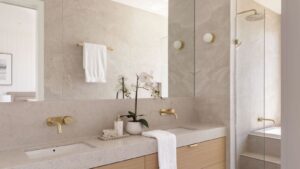
Hard surfaces such as tile, glass, and porcelain dominate most bathrooms by necessity, so softness must be introduced deliberately. Generously weighted towels in muted tones, a woven basket in place of a plastic bin, and a ceramic dish for soap rather than a wire rack all contribute to a quieter, more considered space.
Plants help, too. A fern on a shelf or eucalyptus in the shower adds life and movement. These aren’t styling choices; they’re the kind of details that make a space feel lived in rather than assembled.
Quiet Subconscious Details
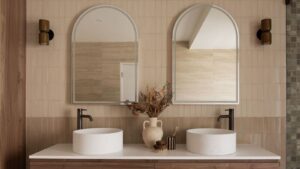
The details that matter most in a bathroom are often the ones you do not consciously notice. A mirror placed at a natural height, storage that keeps surfaces clear without hiding everything away, and finishes that feel warm rather than clinical all contribute to this effect.Fixtures play a quiet supporting role: cabinetry handles, tapware, and towel rails that complement the design rather than compete with it. Consistency in finish brings a sense of cohesion, with enough repetition to make the space feel intentional and restful.
A well-designed bathroom simply needs to feel right in the morning and again at night, offering a place to pause, breathe, and return to yourself, however briefly, before the rest of the day takes over. The best design is not something you notice but something you feel. It is calm, continuous, and quietly personal.